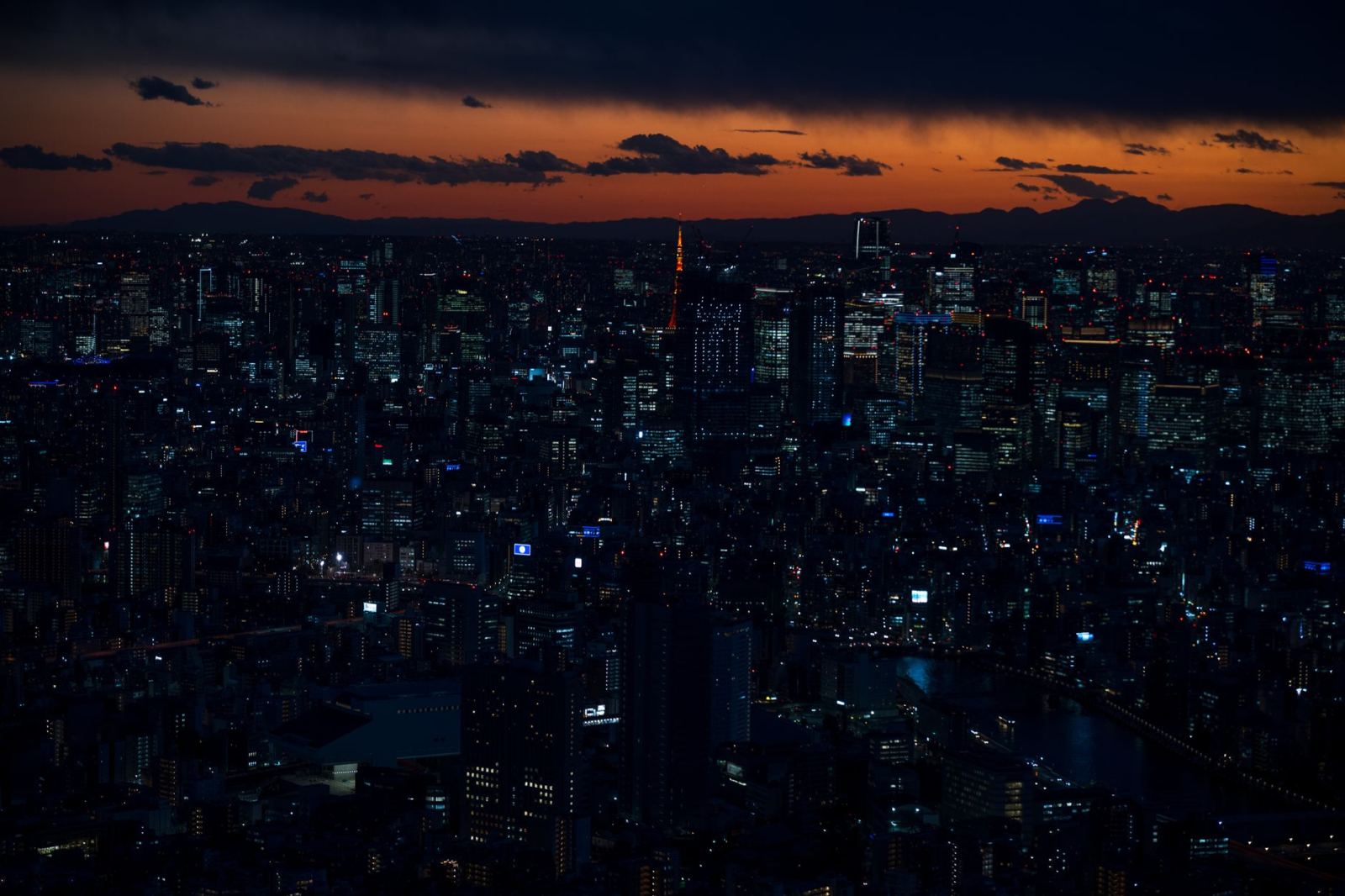
If I had to introduce Tokyo in a single sentence, I wouldn't start with the neon. I'd start with this question: how can one of the world's largest cities be this quiet?
On your first day, what surprises you may not be the skyscrapers, the robots or Shibuya Crossing. That millions of people move at once and nobody shouts; that no one talks on the phone inside the train; that queues form without anyone enforcing them; that not a single piece of litter hits the ground — this creates the greater astonishment.
Tokyo's visible subject is technology, anime, neon and speed. Its real subject is the ethics of living together. Order here is not merely a system built by the city government or the police. It is the sum of the small sacrifices people make to avoid intruding on each other's space.
Tokyo doesn't tell you 'this is what the future will look like'. It asks a more uncomfortable question: if a city this enormous can live in order, why can't we?
Why go to Tokyo?
Tokyo doesn't operate like a single city. Shibuya, Shinjuku, Asakusa, Ueno, Ginza, Akihabara and Yanaka are each strong enough to be another city's centre. That is why the sentence 'let's go to the city centre' cannot be spoken in Tokyo. You must decide which Tokyo you want to see.
One morning you drift centuries back inside the incense smoke of Senso-ji Temple. That same evening, under Shinjuku's giant screens, you find yourself inside a science-fiction film. What impresses about Tokyo is not that old and new stand side by side; it is that they live without destroying each other.
Who is Tokyo right for?
Those who love big-city energy. Those who don't reduce Japanese food to sushi. The curious about design, technology, anime, architecture and city culture. Those unafraid of walking and public transport. Those who take pleasure in details.
Who might struggle in Tokyo?
Tokyo is not a rest holiday. There are 15-20 thousand steps a day, crowded stations, long transfers and decision fatigue. Those seeking the comfort of 'let's take the car and get out at the door' will struggle here.
The city is not cheap; but it doesn't have to be expensive either. The real problem is not price but abundance of choice. Travel without a plan and you lose your time before your money.
The visible subject is the future; the real subject is living without disturbing others
Explaining Tokyo's order with 'the Japanese are disciplined' is laziness. The city has invisible rules: no loud talk inside the train. No phone calls. Queues form and hold. Even where bins are scarce, litter doesn't hit the ground. In a crowd, everyone calculates their own speed and direction. In public space, personal space is protected as far as possible.
All of these rules arrive at the same thought: if my comfort breaks someone else's peace, that comfort is not my right.
Tokyo's real technology is not its fast trains, but millions of people living without colliding.
Tokyo's story, briefly
Tokyo's old name was Edo. When Tokugawa Ieyasu established his shogunate here in 1603, Edo became Japan's political centre. The emperor continued to live in Kyoto; but the country's real power was governed from Edo.
In time the city became the centre of samurai, merchants, artisans and a great popular culture. Kabuki theatre, ukiyo-e prints, soba shops and neighbourhood bathhouses were parts of this city life.
With the Meiji Restoration of 1868 the imperial centre moved to Edo, and the city took the name Tokyo — 'the Eastern Capital'. Rapid modernisation followed.
Tokyo passed through two great destructions: the Great Kanto Earthquake of 1923 and the bombing raids of the Second World War. Much of the Tokyo you see today was therefore rebuilt after the war. The city's historic fabric is not as visible as Kyoto's; you must look for it in the temples, the back lanes, the old shops and the daily behaviour.
Tokyo's story is not preserving the old as it was; it is embedding memory into behaviour while rebuilding after destruction.
When to Go
Late March - early April
Sakura season. Glorious, expensive and crowded. The blossom dates shift with the weather every year. Don't assume 'if I go in April I'm guaranteed to see it'.
May
The weather is usually balanced. Domestic tourism surges during Golden Week; check the dates.
June
The rainy season. It may not rain constantly, but humidity and grey skies are likely.
July - August
The heat and humidity are tiring. In exchange there are festivals and firework events. Build the outdoor programme into the morning and evening hours.
October - November
One of Tokyo's most balanced periods. Autumn colours sharpen toward late November.
December - February
Cold but usually dry and clear. The chance of seeing Fuji from afar is higher. Some businesses change their schedules over New Year.
What to See & Do
1. Asakusa and Senso-ji Temple
Start your first Tokyo morning here. Senso-ji is one of the city's oldest and most important Buddhist temples. The Kaminarimon Gate and its giant red lantern are among Tokyo's most recognised images.
But arrive at midday and you will see more people than temple.
My way: come between 07:00 and 07:30. Before the Nakamise shops open, I see the temple courtyard, the smell of incense and the locals arriving for morning prayer. Then, as the crowd builds, I leave the area.
From Asakusa you can walk to the Sumida River and see the Tokyo Skytree silhouette on the far side.
2. Meiji Jingu and Harajuku
Enter the broad forest path to Meiji Shrine and the city's sound cuts out within minutes. This is one of Tokyo's strongest contrasts: on one side a sacred ground of hundreds of thousands of trees; a few minutes away, Harajuku's youth fashion and crowds.
On the shrine grounds you may see Shinto rituals, sake barrels and sometimes a traditional wedding procession. Then cross to Takeshita Street; but don't spend hours there. Harajuku's really interesting side is not only Takeshita but Omotesando and the design shops of the side streets.
3. Shibuya Crossing
Shibuya Crossing is as striking as it looks in photographs; but it is not merely a show to watch from above. At least once, step into the crowd and cross.
The best time is the blue hour, when daylight fades and the advertising screens sharpen. Live the crossing at street level first; watch it from above after.
Shibuya Sky offers a powerful view; but if the sky is overcast, you are not obliged to go up just because you booked. In Tokyo you are not obliged to do everything you've paid for. In bad weather, an observation deck becomes an expensive fog-viewing event.
See the Hachiko statue; but don't lose half an hour in the photo queue. The story is worth more than the statue.
4. Shinjuku
Shinjuku is Tokyo's controlled chaos. One of the world's busiest stations, a skyscraper district, department stores, tiny bars and nightlife share the same ground.
By day you can ride up to the free observation floor of the Tokyo Metropolitan Government Building. In the evening see Kabukicho's neon, then pass into the narrow lanes of Golden Gai.
Most Golden Gai bars seat only a handful of people. Some welcome foreigners, some open only to regulars, and some charge a seating fee. An English menu at the door or a 'tourists welcome' sign is the safe choice.
If you need a green pause, Shinjuku Gyoen is one of the city's best-kept parks.
5. Ueno and the Tokyo National Museum
Without understanding Japanese history, you see only Tokyo's shiny surface. The Tokyo National Museum is one of the truest stops for samurai armour, Buddhist sculpture, ceramics, calligraphy and the different eras of Japanese art in one place.
Don't try to finish the whole museum. Focus on two or three sections. Museum-going is not a race to raise the number of objects seen.
It links naturally into the same day as Ueno Park, the Ameyoko market and the Yanaka district.
6. Yanaka, Nezu and old Tokyo
If you want old wooden houses, small cemeteries, neighbourhood temples and local shops in Tokyo, go to Yanaka.
This is not an artificial set marketed as 'hidden Tokyo'. It is a real neighbourhood where people continue to live. So when photographing, mind the boundaries of homes and private space.
Yanaka Ginza is a short shopping street. There is no great monument here; that is precisely the point. You come to see Tokyo's daily life.
Honest verdict: a first-timer with only two days is not obliged to squeeze Yanaka in. With four days, it earns its meaning.
7. Ginza, Tokyo Station and the Imperial Palace area
Ginza is not just luxury shops. It is a strong district for Japanese window design, architecture, stationery culture and the department-store food floors called depachika.
See the red-brick Marunouchi face of Tokyo Station. Then walk to the Imperial Palace's outer gardens and the Nijubashi area.
Those wanting to see the palace must set expectations correctly: this is not a building of tourable rooms like Europe's palaces. Most of it is active imperial ground. The outer gardens, the moats and the traces of old Edo Castle carry more meaning.
8. Akihabara
If anime, manga, games and electronics culture interest you, Akihabara must be seen. If they don't, don't give it half a day just because everyone goes.
Beside the big stores, look at the floors selling second-hand figures, retro games and collectables. Prices can vary seriously shop to shop.
The maid cafe experience is not for everyone. If you're curious, go; but know that this is not traditional Japanese culture — it is a performative product of contemporary pop culture.
9. teamLab Borderless
teamLab Borderless is a striking experience where digital art merges with space. It is valuable above all for those interested in light, movement, photography and contemporary art.
But I would not put it in the category of 'everyone going to Tokyo must do this'.
If enclosed, dark, intense visual stimulation tires you, or digital exhibitions don't interest you, give the ticket money to another experience. And at weekends and popular hours, the crowd can stand in front of the art.
10. Tokyo Skytree
At 634 metres, Tokyo Skytree is one of the city's tallest and most recognised structures. In clear weather there is a chance of seeing Mount Fuji; it is not guaranteed.
For first-timers, Shibuya Sky may give a better feel of the city's fabric. Skytree is chosen for the structure's height and the east Tokyo view.
Going up both is not necessary. Rather than watching Tokyo from two different towers, spend part of that time on the street.
For route-combiners: our Japan guide covers the country route, our Kyoto and Osaka guides the Golden Route's other two stops; and for those continuing the Asian tour, the Hong Kong and Singapore guides stand ready.
Food & Drink
Finding bad food in Tokyo is possible; but it usually requires knowingly joining a tourist queue.
The city's strength is not only its Michelin-starred restaurants. A small soba counter inside a station, a neighbourhood ramen shop, or the prepared-food stalls in a department store basement can hold a serious standard.
Sushi
Expensive omakase is not the only option. Kaiten-zushi (conveyor) restaurants and lunch menus offer a more reachable experience. The Tsukiji outer market is fun; but not every stall is good and cheap.
Ramen
Among shoyu, miso, shio and tonkotsu there is no single 'best ramen'. Don't fear the ticket-machine ordering system. Buy the ticket, hand it over, sit down.
Soba
One of Tokyo's city foods since the Edo era. It looks plain, but the noodle's texture and the dashi's balance are everything.
Tempura
Good tempura should be neither heavy nor oily. Lunch sets can be far cheaper than evening menus.
Tonkatsu
As breaded fried pork, those who don't eat pork should take care. In Japan some soups and sauces also contain pork products; don't judge by the visible meat alone.
Yakitori
Literally chicken skewers; but the menu may include various offal cuts. If you don't know what you're ordering, choose piece by piece rather than the mixed set.
Depachika
The basement food floors of the big department stores. Perfect for seeing Tokyo's culinary discipline in one place. There may be discounts near closing; but don't miss the displays while chasing only the markdowns.
Konbini
Don't look down on 7-Eleven, FamilyMart and Lawson. The onigiri, sandwiches, desserts and ready meals are surprisingly good. But eating every meal here means missing Tokyo's kitchen.
Practical Tips
The Tokyo metro looks complicated at first glance; its logic is actually clear. The problem is not the number of lines but different companies running trains in the same area.
IC cards like Suica and Pasmo remove the burden of buying tickets one by one. If it can be added to your phone, that is the most comfortable solution. Physical card and mobile availability change periodically, so check the current situation before travelling.
The most important transport rule
Divide the days by district. Putting Asakusa, Shibuya and Odaiba into the same day is technically possible; it is not wise. In Tokyo a bad plan changes trains instead of showing you the city.
Metro ticket or IC card?
If you'll make many metro journeys in a day, the 24, 48 or 72-hour tourist tickets can pay off. But the JR lines may fall outside these tickets. On days when you'll ride the Yamanote line heavily, do that maths separately.
The 24-hour ticket covering only Tokyo Metro lines and the ticket covering Tokyo Metro + Toei lines are not the same thing. Buy not the cheapest ticket, but the ticket that fits your route.
The last train
Tokyo looks like a city that lives 24 hours; its trains do not run 24 hours. Last services vary by line but end around midnight. Miss the last train, and the taxi bill can erase the whole night's joy.
Haneda Airport
Closer to the city. The Keikyu line and the Tokyo Monorail connect quickly to most areas. Choose by your hotel's location; prefer not the seemingly fastest train, but the route with the fewest transfers.
Narita Airport
Far from the centre. Toward Ueno and Nippori, the Keisei Skyliner is the strong option. Toward Tokyo Station, Shinjuku or Shinagawa, the Narita Express is more practical for some hotels. The limousine bus is exposed to traffic; but with heavy luggage, being dropped near the door can be a great comfort.
There is no single answer called the right airport train. The right answer is the district where your hotel stands.
Where to stay
Shinjuku: right for first-timers and those wanting nightlife and broad transport links. The station's size can tire you in the first days.
Shibuya: young, lively and central. Strong for those who like going out at night. Hotel prices can climb.
Ueno: a good choice for the Narita link, the museums and a more traditional east Tokyo atmosphere. The price-performance balance is usually better.
Asakusa: right for the temple surroundings and calmer evenings. Reaching west Tokyo can take longer.
Ginza / Tokyo Station: ideal for comfort, shopping and intercity rail links. The budget rises.
Akasaka / Roppongi: advantageous for central location, restaurants and nightlife. Tokyo's classic neighbourhood feel is weaker.
Common mistakes in Tokyo
1. Putting districts at opposite ends of the city into the same day
2. Queueing for every popular venue
3. Eating only sushi and ramen
4. Not checking the last train time
5. Boarding the metro with big luggage at rush hour
6. Trying to go up every observation deck
7. Assuming Tokyo can be done cash-free
8. Leaving litter when no bin can be found
9. Mistaking the silence for coldness
10. Believing Tokyo can be 'finished' in four days
Suggested Itinerary
Day 1 — Old Tokyo: Asakusa, Ueno and Yanaka
07:00 Senso-ji and the temple surroundings
08:30 Breakfast or coffee in Asakusa
09:30 Sumida River walk
10:30 Ueno Park
11:00-13:00 Tokyo National Museum
13:30 Lunch around Ameyoko
15:00 Yanaka and Nezu walk
17:30 Return to Ueno
Evening: izakaya or a depachika dinner
This day's real subject: seeing that Tokyo was a great city before the neon.
Day 2 — West Tokyo: Meiji, Harajuku, Shibuya and Shinjuku
08:00 Meiji Jingu
10:00 Harajuku and Omotesando
12:30 Lunch
14:00 The Shibuya streets and Hachiko
Sunset: Shibuya Crossing, and Shibuya Sky if you hold a booking
19:00 Shinjuku
20:00 Dinner at Omoide Yokocho or nearby
21:30 A short exploration of Golden Gai
This day's real subject: seeing that the temple's silence and the neon crowd are products of the same society.
Day 3 — Power, design and contemporary Tokyo
08:30 Tsukiji outer market
10:30 Ginza walk
12:00 Depachika and lunch
13:30 Tokyo Station and Marunouchi
14:30 The Imperial Palace outer gardens
16:30 Azabudai Hills
17:00-19:30 teamLab Borderless
Evening: Roppongi or Akasaka
Alternative: if digital art doesn't draw you, swap teamLab for the Edo-Tokyo Museum, 21_21 Design Sight, or a longer Ginza-Nihonbashi walk.
This day's real subject: Tokyo using design not for display, but to manage flow.
Day 4 — A choice day by interest
Option A - Pop culture: Akihabara → Kanda → Ikebukuro
Option B - Architecture and views: Shinjuku Gyoen → Tokyo Metropolitan Government Building → Daikanyama → Nakameguro
Option C - East Tokyo: Edo-Tokyo Museum → Ryogoku → Tokyo Skytree → the Sumida area
Option D - A day trip: Kamakura, Nikko, Hakone — or the Fuji area if the sky is clear
My preference: on a first Tokyo trip, keep the fourth day inside the city. Fleeing Tokyo before seeing Tokyo grows your list but shrinks your journey.
A final word
At first glance Tokyo shows you the future. A few days later, it makes you realise the future is made not of buildings but of behaviour.
Here, millions of people hurry at once; yet they try not to cut in front of each other. The city is enormous; but it does not raise its voice. Japan does not explain itself to you by force. It does not shout; it whispers.
Coming home from Tokyo, what stays may be Shibuya's screens, Senso-ji's red gate or the ramen you ate. But the real question travels with you longer: if a city can be this crowded and place this little burden on others, what are we doing wrong in our own cities?
Frequently Asked Questions
How many days does Tokyo need?
Four full days is the floor for a first trip. Five or six is more honest. Two days only lets you see the main districts.
Is Tokyo expensive?
Lodging can be expensive; food and transport offer wide choice. A good ramen or lunch set can be reasonably priced. Planlessness costs more than the city itself.
Can you get around Tokyo with English?
At the main stations, ticket machines and tourist areas, largely yes. In small businesses communication can be limited; a translation app does the job.
Is Tokyo safe?
The overall safety level is high. Even so, in night districts like Kabukicho, stay away from the street touts and from venues with unclear prices. In crowds, don't neglect basic care of your belongings.
Is a Suica or Pasmo essential?
Not essential, but a great convenience. It works on trains, the metro and in many shops. Physical and mobile card availability can change periodically.
Is cash necessary in Tokyo?
Yes. Card use has spread widely; but small restaurants, temples and some ticket machines may want cash.
Do you tip?
No. Japan has no tipping culture. Leaving money on the table can confuse the staff.
Should you use taxis in Tokyo?
Useful for short hops and with luggage; expensive as a daily transport solution. Miss the last train at night and the cost climbs seriously.
Do you need a JR Pass for Tokyo?
For Tokyo alone, usually not. If you have a countrywide rail route, decide by calculating the total cost. After the price rises it is no longer automatically the better deal.
Shibuya Sky or Tokyo Skytree?
For the city's fabric, the sunset and the open rooftop, Shibuya Sky; for sheer height, east Tokyo and the structure itself, Skytree. On a first trip, going up both is not necessary.
teamLab Borderless or teamLab Planets?
Borderless is a free-roaming experience where the works flow between spaces. Planets follows a set route and has sections walked through water. If time is short, choose one by your interest.
Where can you day-trip from Tokyo?
Kamakura for history and sea; Nikko for temples and nature; Hakone for onsen and Fuji views; Yokohama for the port-city experience. On a four-day first trip, leaving the city is not obligatory.
Can you enter an onsen with tattoos?
It varies by establishment. Some onsen refuse tattoos, some allow covering patches, some are fully tattoo-friendly. Check the written rule before you go.