Sri Lanka is among the world's most generous islands by travel density per square kilometre: within a week you climb a two-thousand-year-old rock fortress, glide by train through cloud-wrapped tea country, pass wild elephants by jeep and close the day on a palm-lined beach. Distances are short but the roads are slow — which sets the island's rhythm from the start: don't hurry.
The classic route draws a triangle: the Cultural Triangle (Sigiriya-Dambulla-Polonnaruwa) → the highlands (the Kandy–Ella line) → the south coast (safari plus beach). Two weeks tours the triangle comfortably; in one week, choosing two corners beats racing all three.
When to Go
Two monsoons create two calendars: the southwest coast and highlands peak December–March, the east coast (Trincomalee, Arugam Bay) May–September — meaning the island always has a sunny shore, and the route rotates with the season. The Cultural Triangle works year-round; April's heat and the mid-April Sinhala-Tamil New Year crowds are the factors to weigh. Highland evenings stay cool in every season; a sweater is essential on the Ella–Nuwara Eliya line.
What to See & Do
Sigiriya is the island's emblem: the 5th-century palace plateau atop a 200-metre rock monolith is both cool and crowd-free on a 7 a.m. climb — while Pidurangala rock opposite, framing Sigiriya in its view, is the free alternative and sunrise's true address. Dambulla's cave temples and the bicycle-toured ancient capital of Polonnaruwa complete the triangle.
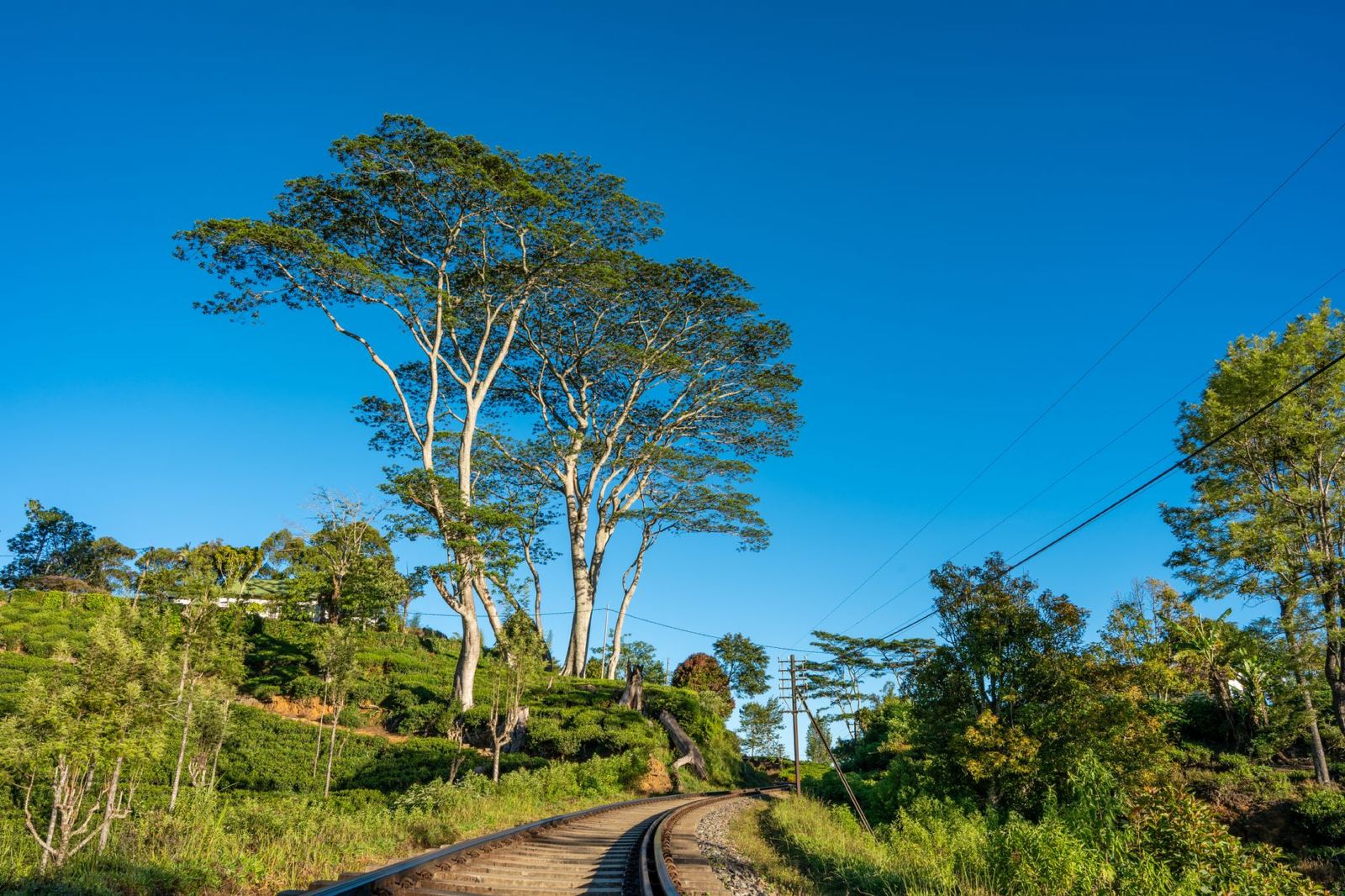
Kandy's Temple of the Tooth is the island's spiritual centre; the real legend is the train ride from there to Ella — those six or seven hours through tea terraces hold permanent membership of the world's most beautiful railway lists (book early for a window or doorway seat). In Ella, the Nine Arch Bridge and Little Adam's Peak are the highland pause's icons; the Lipton's Seat viewpoint above Haputale is the quieter option.
In the safari chapter, choice matters: Yala is famous for leopard density but heavy with jeep traffic; Udawalawe is calmer with its elephant guarantee, Wilpattu the wildest. Minneriya's dry-season 'elephant gathering' (August–September) is the event of the natural calendar. On the coast, Galle's Dutch fort takes the sunset walk, Mirissa the whale tours (November–April) and the Hikkaduwa–Unawatuna line the beach idleness. And at the crossing of faith and nature stands Adam's Peak (Sri Pada): in pilgrimage season (December–May) it is climbed by night to meet sunrise at the summit.
Food & Drink
Rice and curry is the island's daily constitution: five or six small curries arranged around rice (vegetable-leaning, escorted by papadam and sambol) compose differently at every eatery — pol sambol (grated coconut with chilli) is the table's constant. Breakfast's stars are the hopper (appa — the crisp-edged rice crepe, legendary with an egg cracked into its centre) and the string hopper; kottu roti is the street classic arriving with the evening's griddle clatter.
The tea chapter gains its meaning at the source: highland factory tours teach Ceylon tea's ranks through the tasting. Fresh king coconut (the orange one) is the roadside's natural drink; woodapple and mango juices are the market stall's coolness. On the coast, the day's fish and crab curry (Jaffna style, bravely spiced) reach the summit. Heat levels are serious business: the 'less spicy' request is legitimate and necessary — the local chilli sweats even practised palates.
Practical Tips
Transport truths shape the plan: the train is romantic but slow (perfect for the highland leg, not for long hauls); a private car with driver is the island's standard and surprisingly economical solution — flexible enough to make sense even for two travellers. The tuk-tuk covers short distances; the PickMe app ends the bargaining.
The ETA visa is obtained online in advance. Temple etiquette: shoulders and knees covered, shoes and hats off, no posing with your back to a Buddha — and Buddha tattoos or T-shirts can cause trouble at entry. Set the safari jeep for the park's first morning slot; both the animals and the light live in that hour. A warm layer serves in the highlands, reef shoes on the coast. Don't drink the tap water; king coconut is everywhere. The currency is the rupee; cards are common in cities but the village-and-stall line wants cash. And the island's most valuable advice concerns rhythm: plan one big thing a day — Sri Lanka is an island of long afternoons, not compressed itineraries.