Delhi is not one city; it is at least two, and the contrast between them is the journey itself: in Old Delhi's narrow lanes, cycle rickshaws, spice loads and minaret shadows interlock; a few kilometres away stretch New Delhi's imperial-scale avenues, ministries and gardens. From the Mughals to the British Raj, every empire built its own Delhi, and none fully erased the last.
First contact is intense: sound, smell, crowd and insistence arrive at once. Rather than resisting, manage the dose — monuments in the morning, a museum or garden pause at noon, bazaars in the late afternoon. Loving Delhi takes a few days; but to the patient, the city opens India's richest layers of history.
When to Go
October–March is the best window: 15–28°C, sunny and walkable. December–January mornings are foggy with air quality at its worst (consider a mask); February clears. April–June is scorching (45°C happens), July–September monsoon-humid. Diwali, in late October or early November, floods the city with light — it comes with crowds and smog, but the atmosphere is unmatched.
What to See & Do
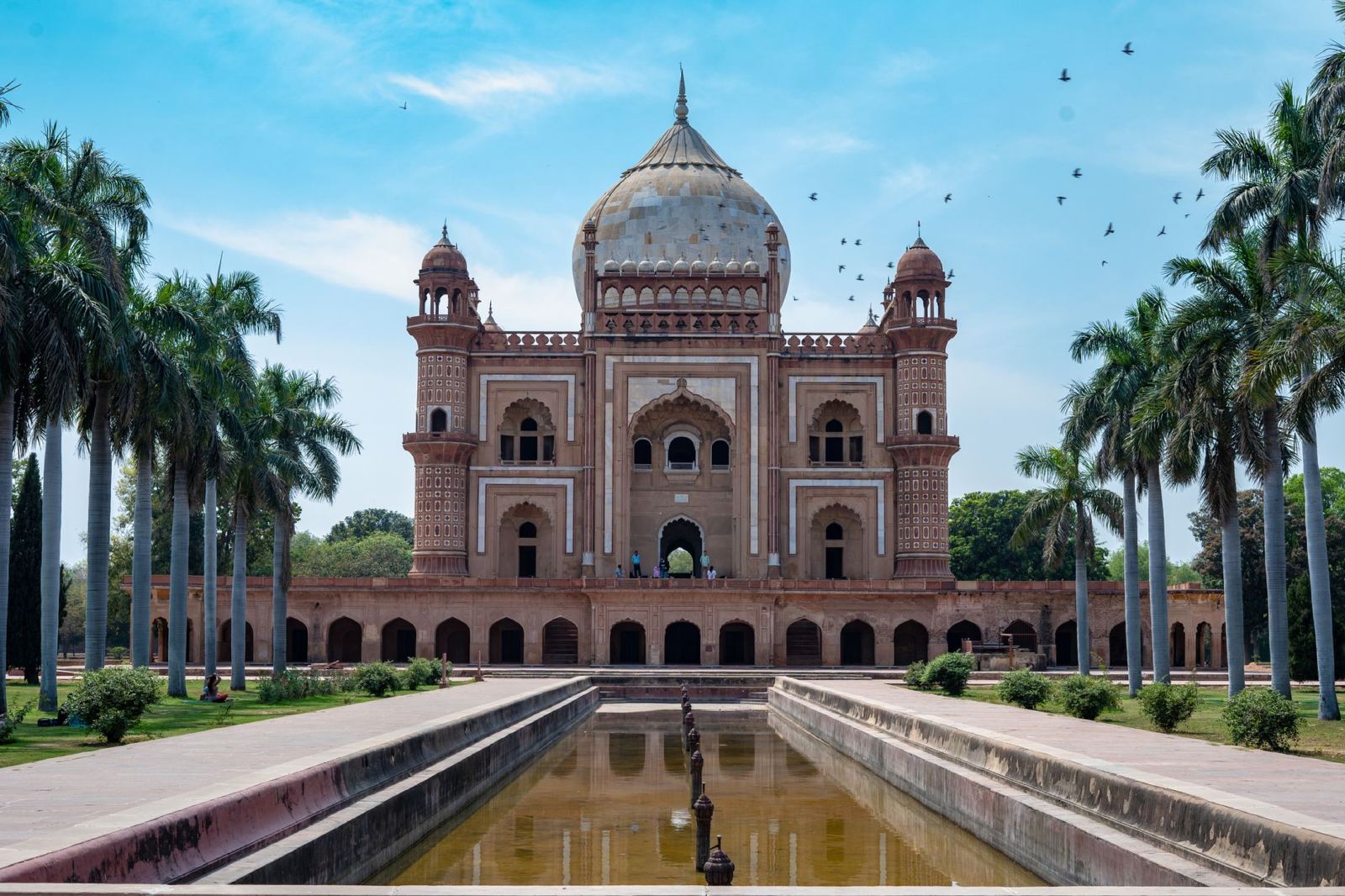
The Mughal trio is the itinerary's spine: Humayun's Tomb (the Taj Mahal's forerunner, in morning light), the Qutub Minar complex and the Red Fort. Each can stretch to half a day; walk them with their gardens. The minaret climb from the courtyard of the Jama Masjid reveals Old Delhi's sea of rooftops.
Do the Old Delhi chapter by cycle rickshaw: from Chandni Chowk's main artery to the spice street of Khari Baoli, from the silversmiths to the wedding bazaar — combining it with a guided street food tour is the most efficient formula. The communal kitchen (langar) of the Sikh temple Gurudwara Bangla Sahib is among the city's most moving experiences; headscarves are provided at the door.
On the New Delhi side: an evening picnic around India Gate, the tomb-studded calm of Lodhi Gardens and the National Museum. The Lotus Temple and Akshardham are the modern era's two great structures. Hauz Khas village pairs a medieval madrasa ruin with café-gallery life. And the practical truth: the Taj Mahal is in Agra, 3–4 hours by express train — doable as a day trip on the 6 a.m. train, but a night in Agra buys you the Taj at sunrise.
Food & Drink
Delhi is the capital of North Indian cooking: butter chicken and dal makhani are synonymous with this city; tandoor breads, kebabs (especially the seekh kebabs around the Jama Masjid) and biryani are the table's heavy artillery. Chole bhature (chickpeas with puffed fried bread) is the breakfast legend.
The street chapter ('chaat') is a curriculum of its own: golgappa/pani puri, aloo tikki, dahi bhalla — try them at Chandni Chowk's historic stalls or the trusted chaat chains. Paratha lane (Paranthe Wali Gali) earns its name. For dessert, jalebi is eaten hot; kulfi is the traditional ice cream. Century-old eateries like Karim's in Old Delhi carry the Mughal kitchen forward. Stomach caution is a realistic topic: bottled water, hot cooked food and the busy-stall rule; ease in gradually over the first days. The masala chai break is the day's natural punctuation.
Practical Tips
The metro is Delhi's superpower: extensive, air-conditioned, cheap, with women's carriages — most tourist sites have a station; use a card or QR rather than tokens. For door-to-door distances use Uber/Ola; for short hops, the autorickshaw (fix the price first).
Private agencies signed 'official tourism office' and the 'your hotel has burned down/closed' scripts are the classic traps — if a driver or 'helpful stranger' steers you there, smile and move on. Buy monument tickets online; the foreigner tariff is separate. Covering shoulders and knees works both for places of worship and general ease; shoes come off at temples and mosques. Winter fog can delay flights; keep connection buffers generous. Bargaining is expected in bazaars; the fixed-price state emporiums are the stress-free souvenir alternative. In Delhi's crowds carry valuables in front; the prevailing feeling is intensity, not danger.