San Sebastián (Donostia in Basque) is the world capital of cities travelled to for food: it pushes the top of the Michelin-stars-per-capita table, but its real revolution sits on the counter — the stacked miniature masterpieces of the pintxo bars are fine dining in democratic form.
Nor is the city only food: La Concha is among Europe's most graceful urban beaches; belle époque façades, the young energy of the Zurriola surf beach and the hills at either end compose a compact holiday geography. Basque identity — language, flag, gastronomic societies — is a proud layer of daily life; you feel this place living to a different rhythm from the rest of Spain.
When to Go
June and September are the sweet spots: beach season open, crowds manageable. July–August is both packed and pricey; the jazz festival (July) and Semana Grande (mid-August, with its fireworks competition) drown the city in festivity. The film festival in late September brings its own buzz. Winter is mild but rainy — the Basque coast owes its green to that rain; and the pintxo chapter knows no season.
What to See & Do
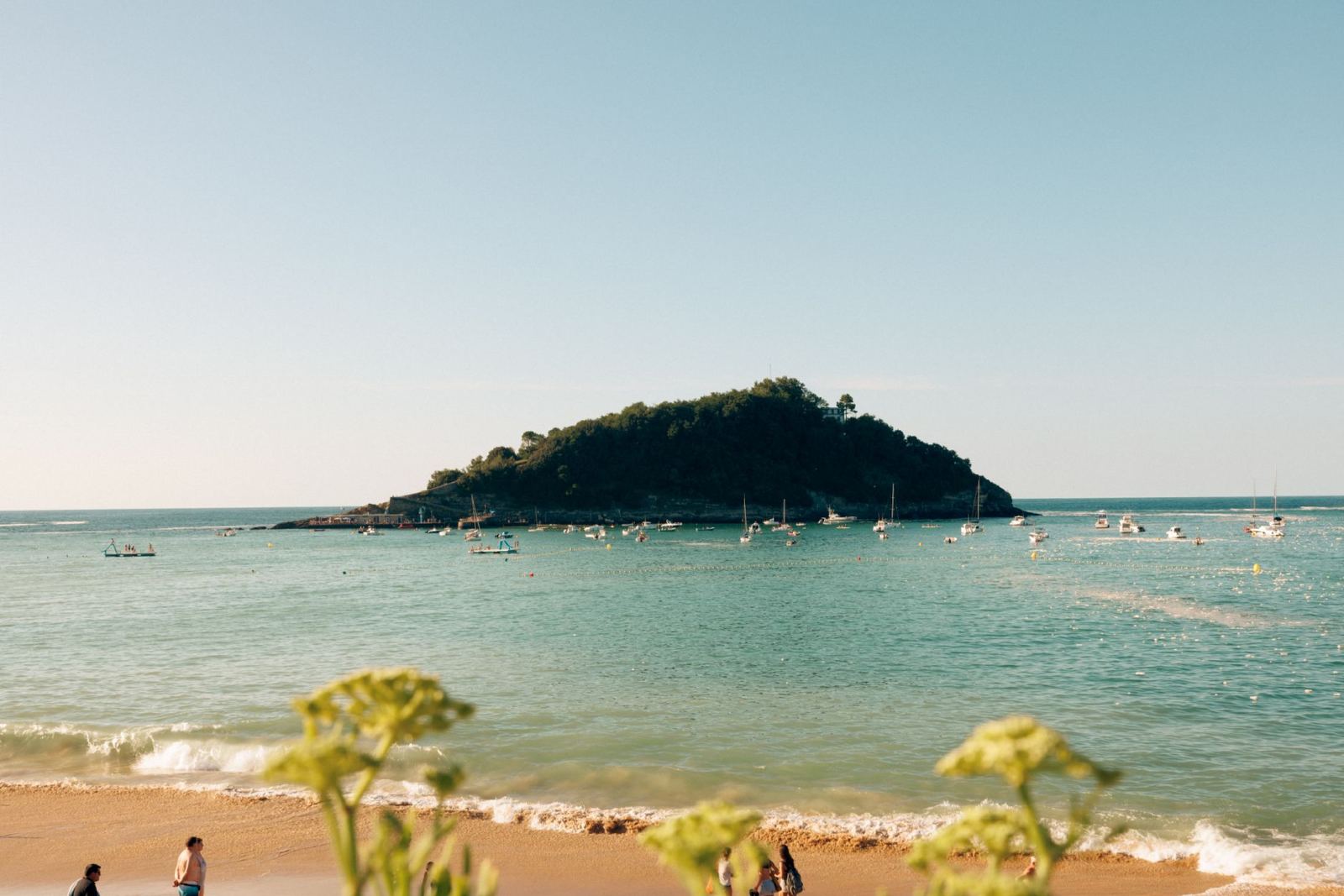
Walking the arc of La Concha is the city's founding ritual: white railings, teak-coloured sand and Santa Clara island in mid-bay. Ride the century-old funicular up Monte Igueldo at the western end — the postcard frame of the bay is taken from here; Monte Urgull at the eastern end offers a free climb and fortress ruins.
The old town (Parte Vieja) is the stage of the pintxo chapter; counters overflow after 1 p.m. and 8 p.m. The numbered balconies of Plaza de la Constitución tell of the square's past as a bullring. Zurriola beach, with its surf schools and young crowd, is the character of the river's far side; the bars of the Gros district are the local alternative to the old town's tourist density.
The Chillida-Leku museum — the farmhouse and sculpture garden of Basque sculptor Eduardo Chillida — makes a half-day art escape outside town; the 'Comb of the Wind' (Peine del Viento) sculptures on the shore already crown the seafront walk. Day trips are generous: the fishing town of Getaria (with its txakoli vineyards), Hondarribia on the French border, and Bilbao's Guggenheim an hour away.
Food & Drink
The pintxo crawl is a matter of method: one or two pintxos and a small drink at each bar, then onward — no sitting, only progressing along the counters. The classics: the gilda (anchovy-olive-pepper skewer), counter tortilla (at its fresh hour), grilled prawns and the hot-kitchen pintxos of the modern bars. In drinks, txakoli (the lightly sparkling Basque white, poured from a height) and barrel cider (sagardoa) are local identity.
The Basque gastronomic societies (txokos) are closed clubs, but they lend the restaurant scene its soul: grilled fish (above all turbot — the Getaria grills are famous), txuleta (aged beef chop over coals) and a seriousness about seasonal produce. The Michelin chapter is a budget decision; lunch menus are the more accessible door to the starred kitchens. For dessert, the 'burnt' Basque cheesecake (in the La Viña manner) is the city's latest gift to the world. Take breakfast at the bakery-pastry shops; the croissant-and-tortilla pairing is the local start to the day.
Practical Tips
Pintxo etiquette: napkins go on the floor (a littered floor marks a good bar, they say), and when serving yourself from the counter, keep count — payment runs on trust. Shoulder-crush at the popular bars is normal; the point is flow, not claiming a spot.
The city is compact and walkable, with strong bike lanes. Bilbao airport is the main gateway (1h15 by bus); San Sebastián's own airport is tiny. Summer weekend beds fill early and cost dearly. The Atlantic tide narrows La Concha's sand by the hour; plan beach time with the tide table. Rain is possible in any season — the drizzle called 'sirimiri' is local folklore. Basque comes first on the signs; a few words (kaixo = hello, eskerrik asko = thank you) guarantee a smile.