Portugal is one of Europe's smallest big countries: six hours by car end to end, yet holding variety measured in weeks — the green valleys and wine terraces of the north, the university and castle towns of the centre, the golden cliffs of the south. The ocean stars everywhere; this country has always lived facing the sea.
Lisbon and Porto are the two pole stars, but the real Portugal lies in the stops between: Coimbra's fado, the cork-oak plains of the Alentejo, the terraced slopes of the Douro valley. Prices sit below Western Europe's, and the hospitality is unshowy but genuine. Rent a car and don't hurry — 'devagar' (slowly) is a way of life here.
When to Go
April–June and September–October are ideal countrywide: sunny, mild and clear of summer crowds. July–August is high season in the Algarve; the interior (Alentejo, Douro) can scorch. The Douro grape harvest (September) is the valley's liveliest stretch. Winter is gentle: the Lisbon–Porto axis stays walkable at 10–15°C and the Algarve offers sunny escapes — though Atlantic swimming takes courage in any season.
What to See & Do
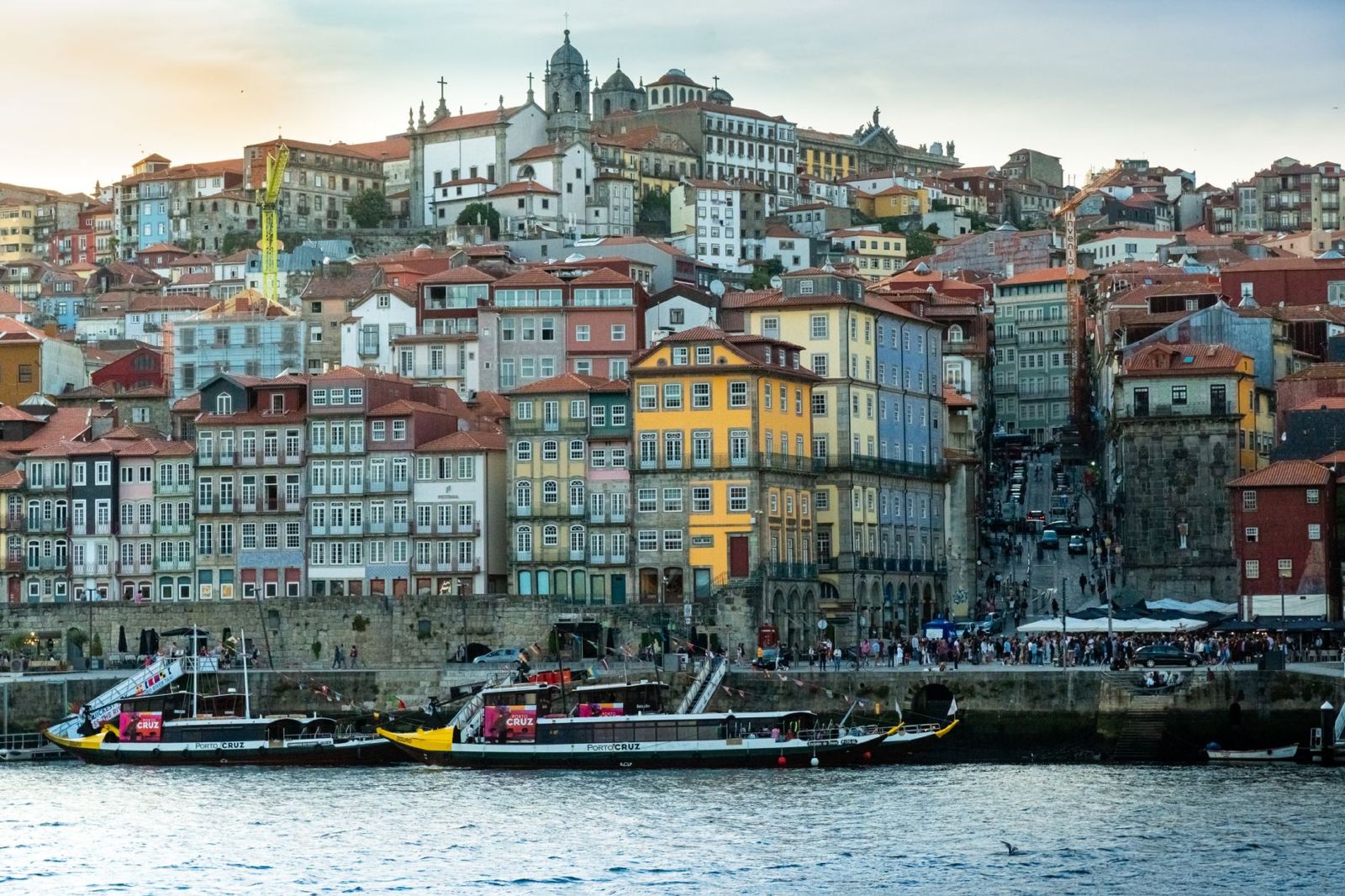
Porto wants two or three days: the river frontage of the Ribeira, sunset from the upper deck of the Dom Luís bridge, Livraria Lello and the azulejo-clad São Bento station. Across the water, Gaia's port wine lodges open for tasting tours. Reach into the Douro valley by train or boat — the terraced slopes around Pinhão are among Europe's finest wine views.
The central route's stops: Coimbra's hilltop university and Joanina library, the walled lanes of Óbidos, Nazaré's giant-wave lookout (in winter) and the Templar convent of Tomar. Sintra, despite the crowds spilling from Lisbon, honestly fills the fairytale chapter with Pena Palace and Quinta da Regaleira.
In the south, the Algarve: the cliff coves around Lagos (Ponta da Piedade), the Benagil cave (by boat or SUP) and the wild surf beaches of the west end. The escape route from the crowds runs inland: the white villages of the Alentejo, Évora's Roman temple and the wine estates. The islands are a separate journey: Madeira's levada walks and the volcanic lakes of the Azores are Portugal's mid-ocean surprises.
Food & Drink
Bacalhau (salt cod) is the national obsession — the 'a recipe for every day' joke applies here too; bacalhau à brás is the easiest introduction. The north's francesinha (Porto's giant sauced toastie) demands courage and appetite. Grilled sardines rule summer evenings; the cataplana (seafood in a copper vessel) is the Algarve's classic.
The pastel de nata is everywhere, but not everywhere equal — choose the place serving it warm with cinnamon. Alentejo cooking (black pork, the bread stew açorda) is the country's hidden heavyweight. The wine chapter runs deep: Douro reds, the light green freshness of vinho verde, Alentejo body, and the fortified world of port and Madeira. Ginjinha is the small-glass sour cherry pause. The bread-olives-cheese opener (couvert) is charged; sending it back is not rude.
Practical Tips
The intercity train (Lisbon–Porto in 3 hours) is comfortable, but the coastal coves and the interior demand a car. Motorway tolls are electronic; clarify the rental's transponder and payment setup at pickup.
The Atlantic is taken seriously: obey the flags, never underestimate the swell on the Nazaré–Ericeira line, and leave a margin at cliff edges. The calçada cobblestones are slippery nationwide — grippy shoes are a national requirement. In tourist restaurants, ask the fish's price before it's weighed to avoid the 'per kilo' surprise. Coffee dialect localises: 'bica' (Lisbon) and 'cimbalino' (Porto) both mean espresso. Rounding up covers the tip. The first-hour-of-the-morning rule is golden here too, at spots like Sintra and Benagil.