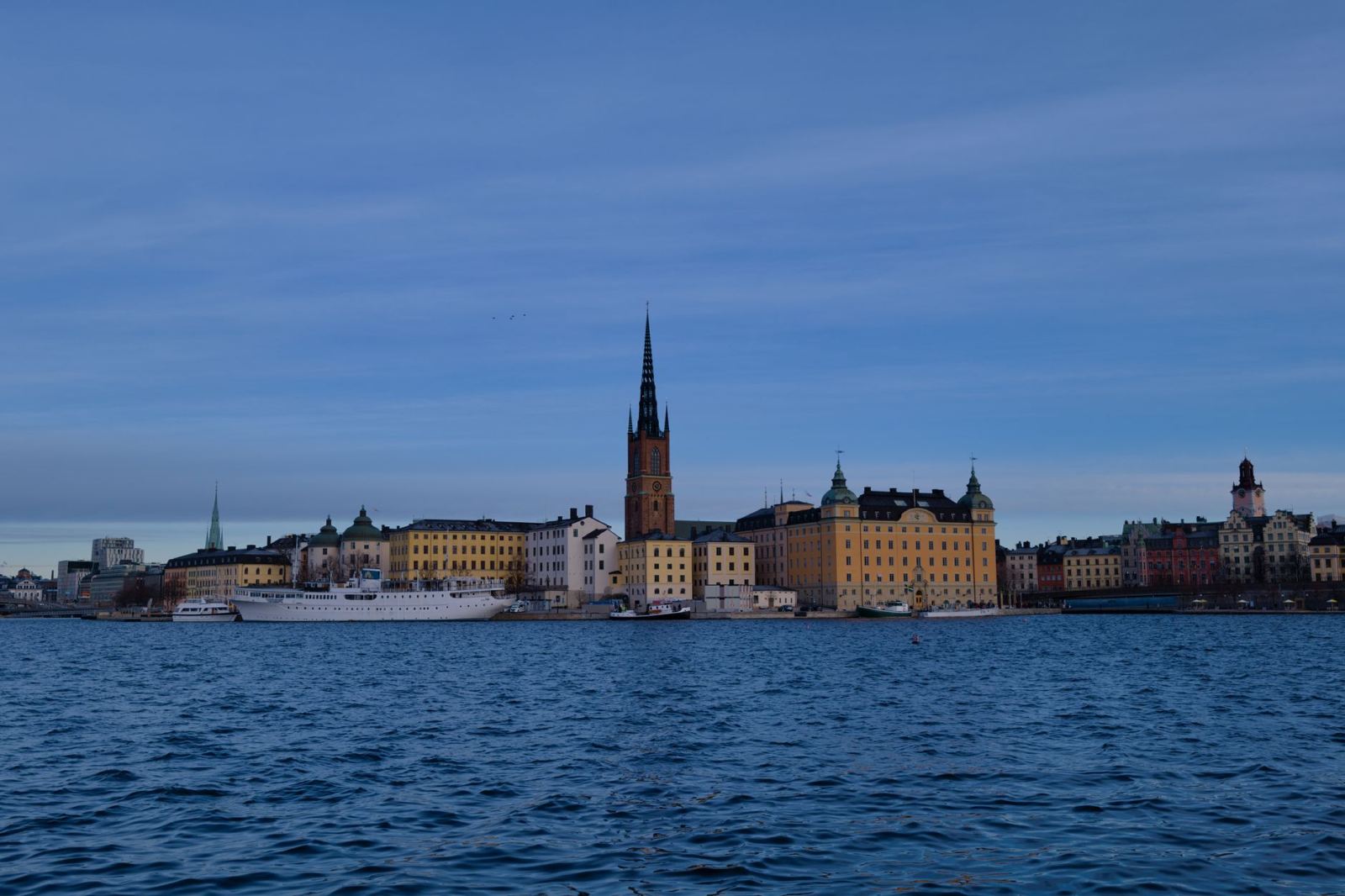
Stockholm is one-third water, one-third green space, one-third city — and you feel that ratio in every view. The centre spreads across fourteen islands stitched together by bridges; walk in any direction and you reach water within minutes.
The city confirms every Scandinavian cliché and transcends them all: yes, design is everywhere; yes, people start out reserved; but sit down at a fika (the coffee-and-bun ritual) table and the ice melts. Stockholm never hurries you — keep the plan loose and move island by island.
When to Go
Late May to early September is the golden window: long days (twilight until midnight in June), archipelago boats on full schedule and the city living outdoors. At Midsommar (late June) the locals abandon town — calm, but some places close. December balances the dark with Christmas markets and Lucia processions. In winter daylight shrinks to six hours; plan a museum itinerary.
What to See & Do
Gamla Stan (the Old Town) with its medieval street fabric is the starting point; skip the main drag of Västerlånggatan for the parallel lanes and Mårten Trotzigs Gränd (the 90 cm narrowest street). The changing of the guard at the Royal Palace happens around midday.
The Vasa Museum is Stockholm's undisputed number one: a warship that sank on its maiden voyage in 1628 and was raised almost intact 333 years later is something you will see nowhere else. On the same island (Djurgården) are the Skansen open-air museum and the ABBA Museum — the three make a full day.
For photographers, the Gamla Stan skyline from the Fjällgatan and Monteliusvägen terraces — especially at sunset — gives the city's best frames. Södermalm's SoFo district is for vintage shops and cafés. And the essential Stockholm experience: boarding an archipelago boat (Vaxholm is the easiest) for a day among the islands. The metro stations themselves deserve a tour as 'the world's longest art gallery' — see T-Centralen, Kungsträdgården and Solna Centrum.
Food & Drink
Swedish cuisine's ambassador — meatballs (köttbullar) with mashed potato, lingonberry jam and cream sauce — remains one of the most reliable orders. But the true daily institution is fika: at least one coffee-and-kanelbulle (cinnamon bun) break a day, non-negotiable.
Östermalm Saluhall, an elegant historic market hall, is the address for tasting salmon, reindeer and Swedish cheeses. At lunch, 'dagens rätt' (dish of the day) menus are the budget-friendly quality option in an expensive city. Seafood is taken seriously — especially if you hit crayfish party (kräftskiva) season in August. Outside Systembolaget (the state alcohol monopoly) supermarket beer is very weak; alcohol in restaurants is pricey.
Practical Tips
The Arlanda Express reaches the centre in 18 minutes but costs accordingly; airport coaches and the commuter train are the budget alternatives. In town, an SL card or contactless card covers the whole network.
Sweden is effectively cashless — many places refuse cash; make sure your card works. Most museums close on Mondays. Café counters on archipelago boats are expensive; pack a picnic. The summer night light wrecks sleep schedules — an eye mask is serious advice. Street hustlers and pickpockets are all but absent; Stockholm is among Europe's most relaxed capitals.