Reykjavik is less a capital than a base camp for a supernatural island — but saying so shortchanges the city. With 140,000 people it's one of the world's smallest 'real' capitals, and probably the world leader in bookshops, musicians and swimming pools per capita.
Geothermal energy sets the city's rhythm: pavements are heated with hot water, every neighbourhood has its thermal pool, and the true centre of social life is the hot pots at those pools. If you want to meet Icelanders, skip the bar and go to the pool.
When to Go
There are two Icelands: summer (June–August) with the midnight sun, green valleys and every road open; and northern lights season from September to March. For the lights, September–October and February–March beat midwinter for both weather and road conditions. In November–January daylight shrinks to 4–5 hours. Prices peak in summer; May and September are the months for balance-seekers.
What to See & Do
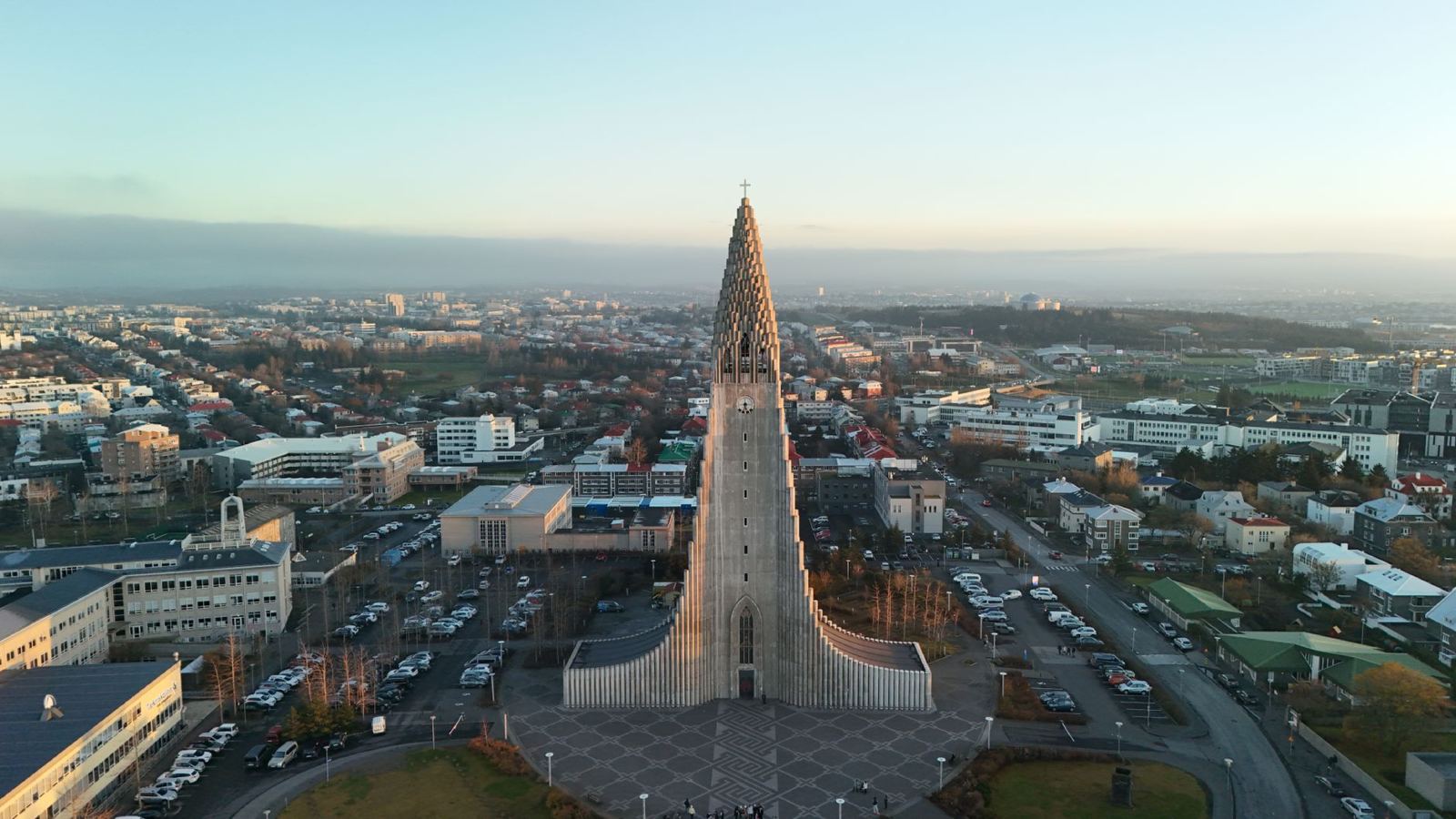
In town: see the sea of coloured roofs from Hallgrímskirkja's tower, walk the glass honeycomb of the Harpa concert hall and browse Laugavegur street. The Sun Voyager sculpture is the classic sunset frame against the bay. But the real Reykjavik experience is the local pools: a morning at Sundhöllin or Laugardalslaug is a more authentic (and ten times cheaper) thermal experience than the Blue Lagoon.
Outside town is this place's reason for being: the Golden Circle (the Þingvellir rift, Geysir, Gullfoss falls) fits in a day. The south coast route — Seljalandsfoss, Skógafoss, the black sand of Reynisfjara — is longer but more striking. Winter adds ice cave and northern lights tours; summer opens the highland crossings.
The Blue Lagoon sits on the airport road; scheduling it for your first or last day makes sense, and booking is mandatory. The less crowded alternative: Sky Lagoon's oceanside infinity pool.
Food & Drink
Icelandic cooking is built on the sea and lamb: fresh cod and arctic char, kjötsúpa (lamb soup) and the world-famous pylsur (the Icelandic hot dog — order it 'with everything'). Skyr, the yoghurt-like native dairy, seeps into every meal.
The fine dining scene is small but ambitious; Iceland's take on new Nordic works with seaweed, wild herbs and fermentation. Hákarl (fermented shark) is offered as the tourist test — try it, expectations low. Coffee culture is serious; Reykjavik tops world per-capita consumption. Restaurant prices run high: lunch menus and bakery sandwiches balance the budget.
Practical Tips
Keflavík airport is 50 minutes from town; Flybus and similar shuttles meet every flight. The centre is entirely walkable; a car is only needed for routes beyond the city.
When renting, take the insurance seriously (gravel and ash-storm damage is real) and choose 4x4 in winter; checking road.is for roads and vedur.is for weather is part of the local reflex. Iceland is completely cashless. Pool etiquette is strict: a swimsuit-free shower in the changing room before entering is mandatory — ignoring this genuinely causes offence. The tap water is among the world's best (the sulphur smell in hot water is normal). The northern lights are never guaranteed; stay at least 3–4 nights and follow the forecast apps.