Morocco is the greatest cultural leap a short flight can deliver: just beyond the Mediterranean begin the call to prayer, caravan architecture and the gate of Africa. The country's secret is its variety — in one week, imperial medinas, snowy Atlas passes, oasis valleys and Saharan dunes can line up on a single route.
Marrakech has its own guide; the question here is the country's composition. The classic loop is set: Marrakech → over the Atlas to the desert (Merzouga) → the Todra and Dades valleys → Fes — or the reverse. The northern add-on (Chefchaouen, Tangier) and a coastal pause (Essaouira) personalise the route. Bargaining, offered tea and the flexibility of 'inshallah' are the trip's grammar.
When to Go
March–May and October–November are the country's golden windows: mild days in the medinas, comfortable nights in the desert. Summer is merciless inland (45°C in Marrakech and the desert) — in those months the coast (Essaouira's cool wind) and Atlas highlands are the rescue. Winter is sunny but hard at night: desert camps drop to zero and the Atlas passes see snow; December–January is the season of crowd-free medina photographs. Ramadan shifts the rhythm but tourist facilities operate; iftar tables are the experience's bonus.
What to See & Do
Fes is the country's spiritual capital and holds the world's largest car-free urban fabric: the nine-thousand-street medina is a place to get lost in without a guide and to decode with one — don't miss the tannery terraces, the Kairaouine quarter and the tiled courtyards of the medersas. The gates of Meknes and the Roman ruins of Volubilis nearby make a half-day extension.
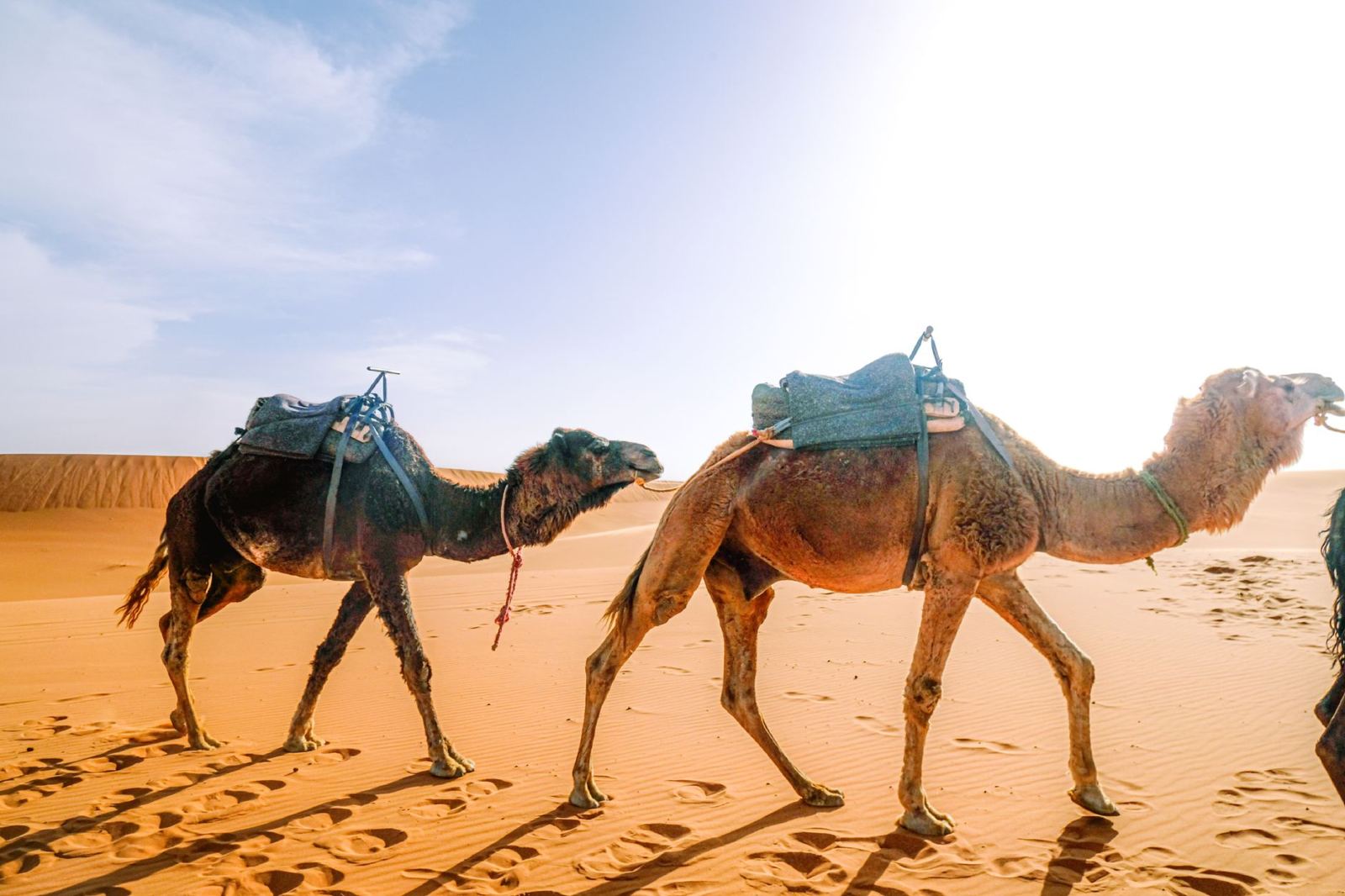
The desert route is the trip's summit: over the Atlas by the Tizi n'Tichka pass to the mud-brick ksar of Ait Benhaddou (the set of a hundred films), on to the Todra gorge and the Erg Chebbi dunes of Merzouga — sunset by camel, Berber drums at camp and the Sahara from a dune crest at dawn. Those who can give it two nights approach caravan speed.
The north's star is Chefchaouen: a mountain town painted every shade of blue, offering a real stillness beyond the photograph. On the coast, Essaouira — walled harbour, booming Atlantic, artisan shopkeepers — is Marrakech's antidote. Rabat's elegant calm and Tangier's reborn waterfront join the route according to your flight points.
Food & Drink
The foundations of the Moroccan table live in the Marrakech guide (tajine, couscous, tangia); the countrywide additions are these: Fes's pastilla (the sweet-savoury pigeon or chicken pie — the city's signature), the desert route's medfouna (the 'Berber pizza', a stuffed bread baked in embers), Essaouira's fish picked and grilled at the harbour stalls, and the goat's-cheese-and-honey breakfasts of the mountain towns.
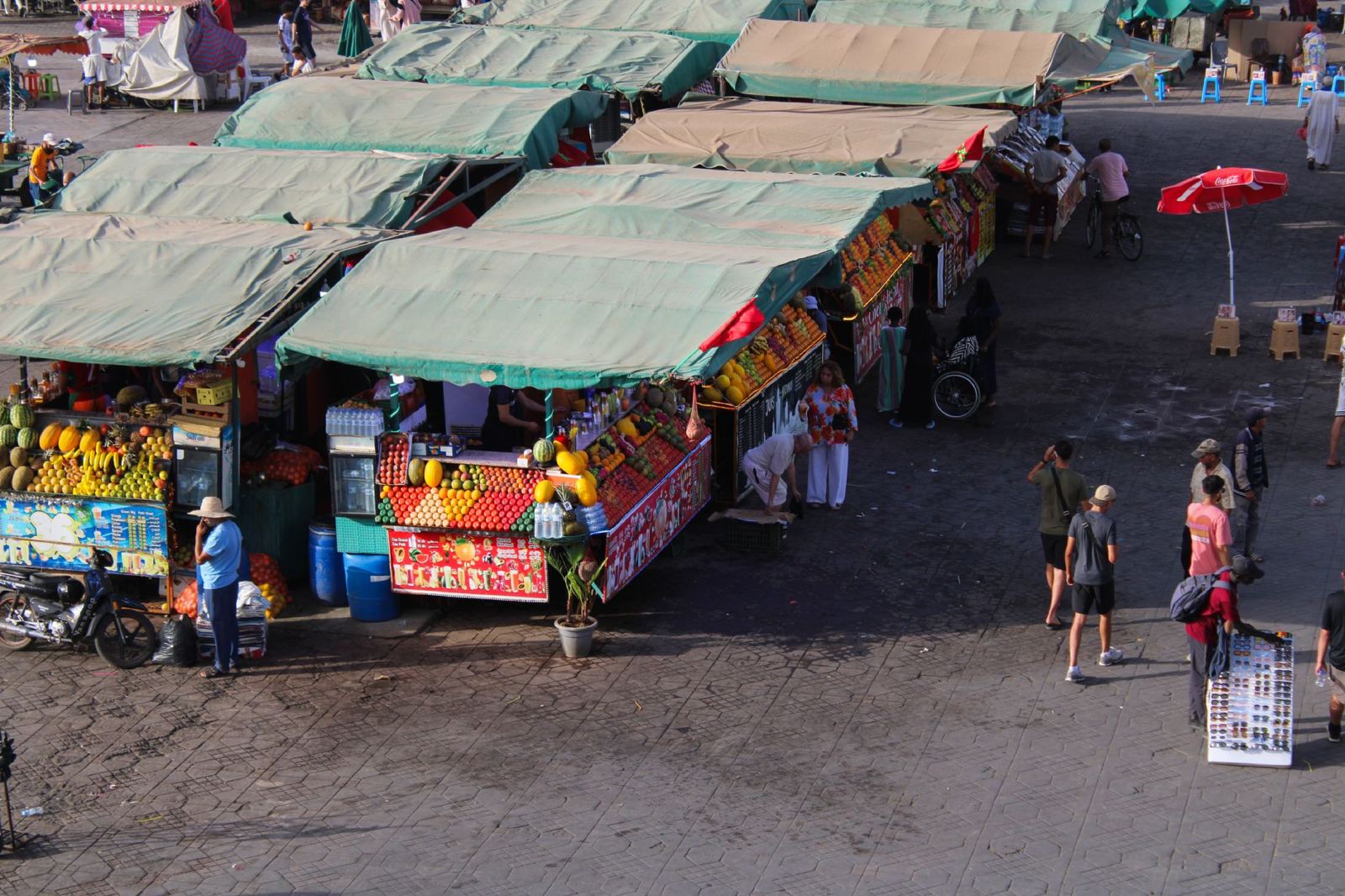
Friday couscous is a family institution — the pots simmer in restaurants that day too. Olives, saffron (Taliouine) and argan oil (produced only in the south, with tasting cooperatives along the road) are the market's true treasures. The mint tea ceremony brackets every negotiation; pouring from a height is for the foam, and a mark of skill. Fresh orange juice and msemen are the day's dependable street pauses. Alcohol stays limited to tourist hotels and select restaurants.
Practical Tips
Route logic decides transport: intercity trains (the Casablanca–Rabat–Fes line and the Tangier high-speed link) are comfortable; for the desert loop there are three options — a rental car (good roads, free driving), a car with driver (delegates the fatigue) or the shared 3-day/2-night tours (most economical). On the Atlas crossing, brace for the bends and the chance of chains in winter.
Medina etiquette matches the Marrakech guide: firm politeness, 'la shukran' and the riad's business card. The permission rule for photographing people applies nationwide — the residents of the blue streets, above all, are not scenery. In choosing a desert camp, the difference between 'luxury' and standard is less comfort than insulation; ask about sleeping bags for winter nights. The dirham is a closed currency — change it back before leaving. And the country's golden rule concerns time: add an 'inshallah margin' to the plan; Morocco smiles on those who bend.