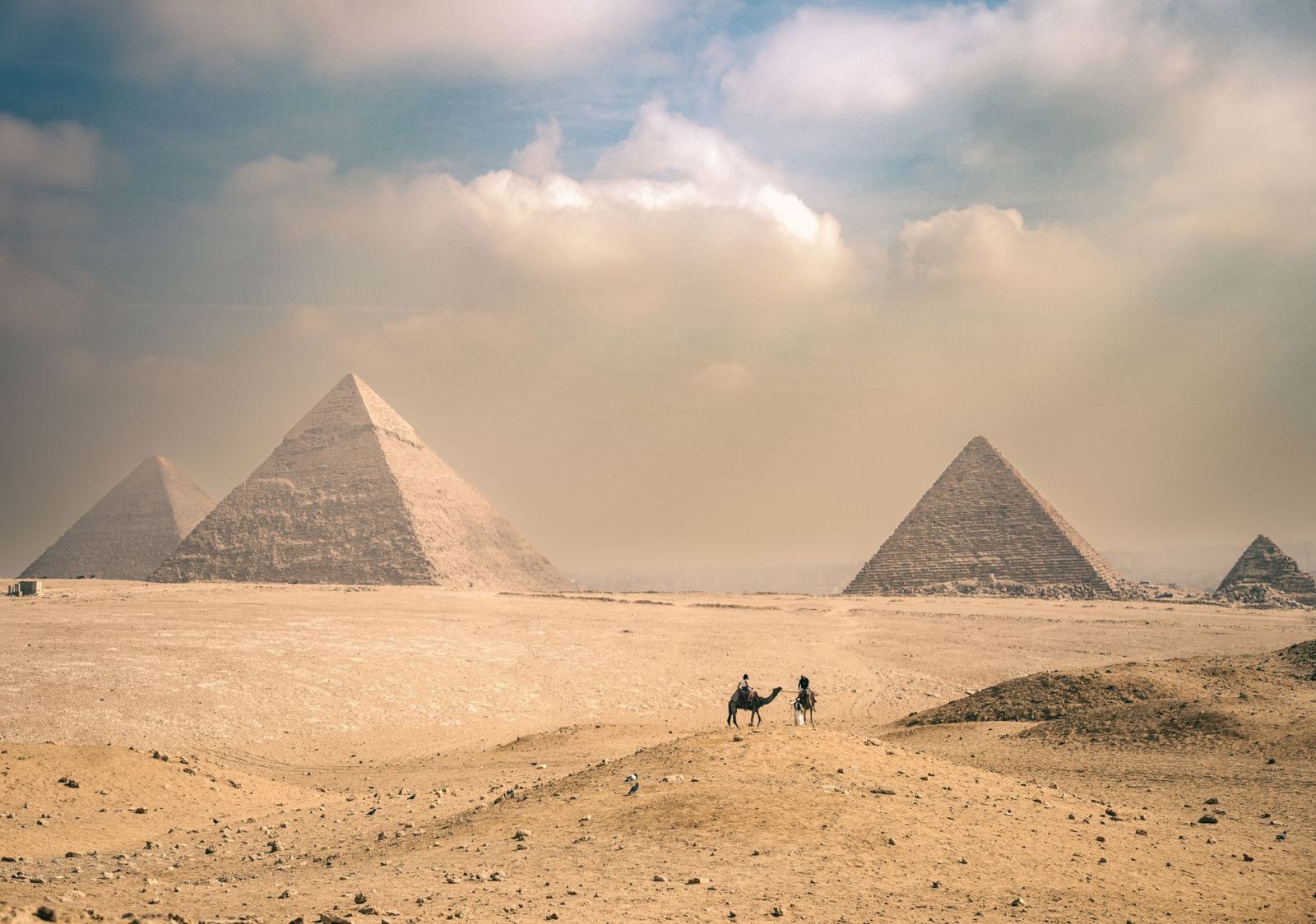
Every first-time visitor to Egypt shares the same moment: standing on the Giza plateau and seeing that the pyramids really are there, really are that big. Photographs cannot prepare you — the scale of 4,500-year-old stone can only be grasped in person. And that is merely Egypt's front door.
The country's real treasure opens southward: the temple forests of Luxor along the Nile, the painted tombs of the Valley of the Kings, the Nubian calm of Aswan. Add Cairo's chaos, the Red Sea's coral reefs and the desert oases, and Egypt reveals itself as too layered for a single trip.
When to Go
October–April is the ideal window: 20–25°C in Cairo, sunny but walkable days in Luxor and Aswan. December–January is peak season; Nile boats and popular hotels fill early. May–September exceeds 40°C in the south — if you must go, compress sightseeing into 6–10 a.m. The Red Sea coast is swimmable year-round; for diving, September–November offers the best visibility.
What to See & Do
Go to Giza at opening: the trio of morning light, coolness and calm before the tour buses is priceless. Take the nine-pyramid shot from the panorama point; save the Sphinx for the way out. The Grand Egyptian Museum (GEM) — with the complete Tutankhamun collection — now sits beside the pyramids and wants a full day; don't confuse it with the old Tahrir museum.
In Cairo, the Islamic quarter (al-Muizz street, the Sultan Hassan Mosque) and the Coptic district fill half a day; the bargaining chapter takes place in the Khan el-Khalili bazaar. But give Cairo two days at most — the real programme lies south.
In Luxor: Karnak (early morning) and Luxor temple (in sunset light) on the east bank; the Valley of the Kings, Hatshepsut's temple and the Colossi of Memnon on the west. A sunrise hot-air balloon shows the Nile's two worlds from above. Between Luxor and Aswan, a 3–4 day Nile cruise — or the more intimate felucca under sail — carries the soul of the trip; the temples of Kom Ombo and Edfu lie on the route. From Aswan, take the morning convoy to Abu Simbel — Ramses' giants carved into the mountain repay every minute of the road.
Food & Drink
The Egyptian table rests on food of the people: koshary (the national dish of lentils, rice, pasta and chickpeas), ful medames (mashed fava beans) and taameya (Egyptian falafel). All fill you for a few dollars, and the best come from street eateries.
On the grill front, kofta, stuffed pigeon (hamam mahshi — bold but a local classic) and Nile perch stand out. Molokhia (jute mallow soup) is the emblem of home cooking. For dessert there is om ali (Egypt's bread-and-milk pudding) and kunafa, cousin of the künefe. Fresh mango and guava juices, karkade (hibiscus) and mint tea are the standard drinks; the real experience is settling into an ahwa — the traditional coffeehouse — with a waterpipe and thick Arabic coffee.
Practical Tips
Visas come on arrival or as e-visas for most nationalities — check the current rules. Bargaining and tipping (baksheesh) are the fabric of the economy: keep a stock of small notes; every service from the toilet attendant to the tomb guardian expects a small tip.
For domestic travel, Cairo–Luxor/Aswan flights save time; the night train is the nostalgic alternative. In the city, Uber (working in Cairo) beats taxis for comfort. Persistent selling is real: the tourist who smiles, stays firm and keeps walking wins — 'la shukran' (no thank you) will be your most used phrase. For women travellers, conservative dress (shoulders, knees) buys ease. Don't drink tap water. Photography rules vary at the sites; some tombs need a separate ticket. Some places close briefly for Friday noon prayers. Security varies by region; the main tourist corridor (Cairo–Luxor–Aswan–Red Sea) is heavily protected and travels smoothly.