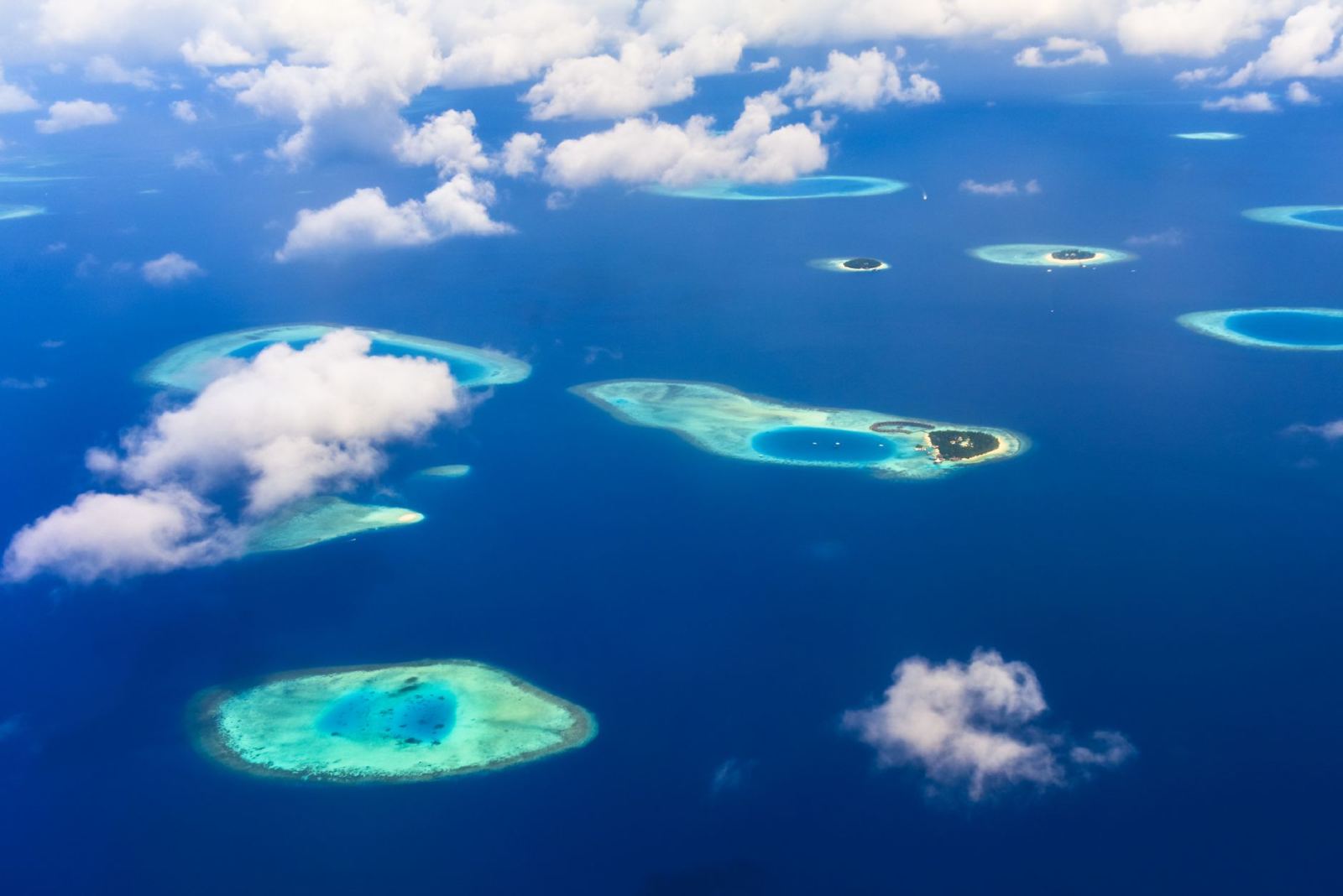
The Maldives looks exactly like its photographs — a rare compliment: turquoise lagoons, flour-white sand and overwater villas appear that way without filters. But the archipelago's lesser-known truth is that it offers two different Maldives: the luxury world of the 'one island, one resort' formula, and the guesthouse economy of local islands opened to tourism since the 2010s.
The second path brings paradise within budget: on islands like Maafushi, Dhigurah or Thoddoo you stay for a reasonable nightly rate and swim the same coral reefs by boat. In return, local rules apply (modest swimwear on public beaches, alcohol-free islands). Whichever path you choose, the real treasure is underwater: manta rays, turtles and one of the richest reef ecosystems on earth.
When to Go
December–April is the dry season: sunshine near-guaranteed, the sea like glass, prices at their peak — the Christmas–New Year weeks are a category of their own. May–November counts as the 'wet' season, but tropical downpours pass quickly most days; prices drop sharply and the plankton carried by the southwest monsoon multiplies manta and whale shark encounters (Hanifaru Bay, June–November). Diving visibility favours the eastern atolls in the dry season, the west in summer.
What to See & Do
The 'sights' list in the Maldives is short because the real list is underwater: hours of snorkelling the house reef, turtle and reef shark encounters, bioluminescence plans by night. When choosing a resort, the quality of the house reef matters more than the room category — 'can I swim to the reef?' is the key question.
The classic experiences have earned their status: a sandbank picnic, a sunset dolphin cruise, night fishing and — at least once — the seaplane transfer, whose aerial view of the atolls yields the trip's best photograph. In diving, Ari Atoll (whale sharks), Baa Atoll's Hanifaru Bay (hundreds of mantas in season) and the channel dives of South Malé lead the routes.
On the local island path, Maafushi is the base for boat trips, Dhigurah the gateway to the whale shark line, Fulidhoo the address of quiet. Half a day covers Malé: the fish market, the Friday Mosque and the narrow lanes — seen while awaiting a transfer. And the most important 'activity': doing nothing at all. The Maldives is one of the rare places where planlessness is legitimate.
Food & Drink
Maldivian cooking is built on tuna and coconut: mas huni (shredded tuna with coconut and onion — the breakfast staple with roshi flatbread), garudhiya (tuna broth) and fihunu mas (spiced grilled fish) are the local classics. The teatime snacks called 'hedhikaa' (fish cakes, samosa cousins) fill the counters of local island cafés.
On the resort side the kitchen is international and, since everything is imported, expensive — half-board and full-board packages are usually the sensible investment. Fresh fish stars in both worlds; a beach grill at sunset is a classic but justified romance. The drinks truth: alcohol is served only at resorts and on safari boats; on local islands, fresh coconuts and tropical juices fill the table.
Practical Tips
The budget decision comes first: resort or local island? Resort transfers (seaplane or speedboat) are arranged with the booking and add seriously to the price — to remote atolls, the transfer can cost as much as the room. Local islands are served from Malé by public ferry (very cheap, slow) and speedboats.
Use reef-safe sunscreen (oxybenzone-free) — it matters to the coral; touching or standing on the reef while snorkelling is strictly out. On local islands, beachwear is free only in the sections marked 'bikini beach'; in the village, covered shoulders and knees are the currency of respect. Ferry schedules thin on Fridays. Drone rules vary by resort — ask. The internet is surprisingly good (an eSIM is the practical fix). The seasick should prepare for speedboat transfers. And a final note: the coral here lives under climate stress — you may see bleached sections; for those seeking healthy reef, house-reef reviews are a more honest source than brochure photographs.