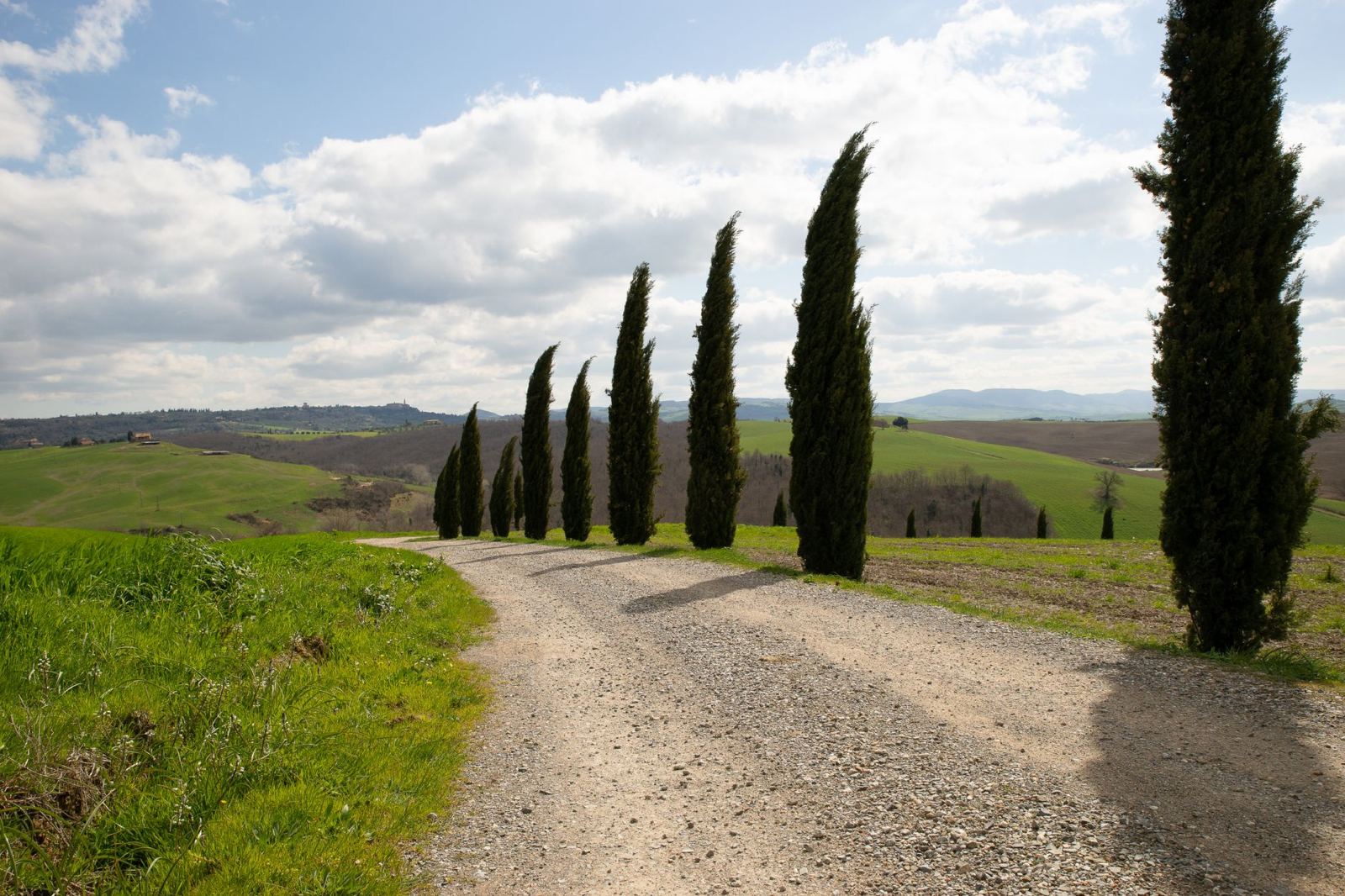
Tuscany's landscape is no accident but the joint work of centuries: hill towns built for defence, cypress rows planted as waymarks, terraced vines for livelihood — and the sum became the world's finest example of geography shaped by hand. The 'sights' list here is secondary; the real experience is the road between two towns.
The right composition works on base logic: Florence has its own guide for the city chapter — the Tuscan trip proper means settling into a rural agriturismo (farm stay) and weaving star-shaped day trips around it. The car is freedom's only key here; the plan stays loose, the lunches long.
When to Go
May–June and September–October are Tuscany's two golden states: the first arrives with poppy fields and green hills, the second with the grape harvest (vendemmia) and golden light. July–August is hot and crowded; the hill towns surrender to tour buses at midday — the early-morning-and-late-evening rule saves lives here. November–March is the quiet season: misty valleys, the olive harvest (November) and fireside trattoria evenings — the local's Tuscany rather than the postcard's.
What to See & Do
The Val d'Orcia is the landscape's heart: Pienza (the Renaissance 'ideal city' and pecorino capital), Montepulciano and Montalcino (fortresses of two great wines) and the cypress-lined road curves around San Quirico — the frames where photographers keep dawn vigils are here. The square-pool of Bagno Vignoni and the free white travertines of Bagni San Filippo add the thermal pause.
Chianti, between Florence and Siena, is the classic route of farmhouse and castle tastings (the SR222 road); small producers by appointment tell the story more warmly than the big names' walk-in doors. Siena deserves its own day: the fan-shaped Piazza del Campo, the cathedral's striped marble and the air of the Palio. San Gimignano's towers are yours before 9 a.m.; alternatively Volterra offers the same medieval fabric crowd-free, with an Etruscan layer beneath.
In the west, Pisa's tower (with its square, half a day) and a cycle around Lucca's walls combine into one day. In the south, the sulphur cascade pools of Saturnia are free and enchanted at sunrise. And the trip's best 'activity' involves food: a farmhouse pasta class or an olive oil tasting binds the landscape to the table.
Food & Drink
Tuscan cooking is 'cucina povera' ennobled: ribollita, pappa al pomodoro, the saltless bread (deliberate — built to escort sauces) and the olive-oiled simplicity of fagioli. The bistecca alla fiorentina is the region's monument, but the countryside's signatures run strong too: pici (thick hand-rolled pasta, with cacio e pepe or wild boar ragù), Cinta Senese pork charcuterie and Pienza's pecorino ladder (a tasting plate from fresh to aged).
The wine chapter reads by geography: Chianti Classico's black rooster label, Montalcino's Brunello, Montepulciano's Vino Nobile and the coast's Super Tuscans — at tastings the driver rule is taken seriously, and the spittoon is no shame. Olive oil here is not a dressing but a main ingredient; November's 'olio nuovo', peppery and green over grilled bread, counts as an event. For dessert, the cantucci-and-vin-santo pair is the meal's official close. And the agriturismo dinner — four courses from the farm's own produce — outclasses most restaurants.
Practical Tips
Car truths: the historic centres of the hill towns are ZTLs (camera-enforced no-go zones) — leaving the car at the out-of-town lot and walking in is the only correct method; white lines mean free parking, blue lines paid. The white gravel roads (sterrate) are normal in navigation and part of the scenery — don't fear them, just slow down.
Agriturismo bookings are made months ahead for summer and harvest; always ask about the dinner option (half board). Wine tastings have turned to appointment culture — write or call before driving to the gate. The towns keep weekly market days (Siena's is Wednesday, for one) — aligning the route with market day builds the best lunch table. Photographic light lives from 7 to 9 a.m. and 6 to 8 p.m.; at noon the landscape flattens, so take the siesta. And Tuscany's golden rule: never plan more than two towns a day — the third steals the taste of the first two.