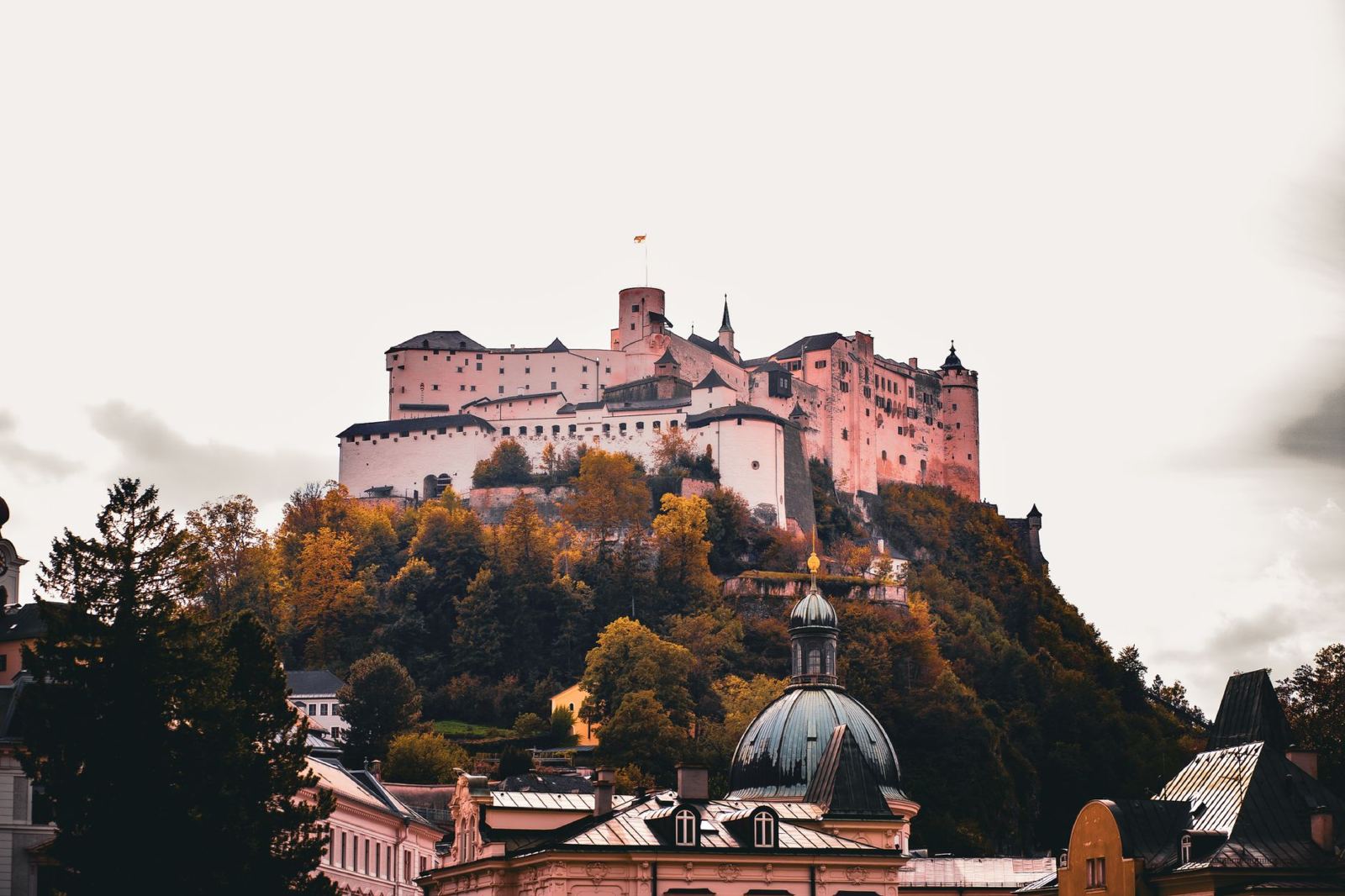
Salzburg is a compact masterpiece: a baroque centre on both banks of the Salzach, crowned by the Hohensalzburg fortress, with the Alps rising behind. The city earned its wealth from salt ('Salz') and owes its fame to two cultural phenomena: Mozart and The Sound of Music.
Don't let its smallness deceive — the musical calendar is world-scale: the summer festival (Salzburger Festspiele) is classical music's summit gathering, and palace concerts, church recitals and the marionette opera fill the rest of the year. Salzburg can be seen in a day or two, but leaving without a musical evening is leaving the city unfinished.
When to Go
May–June and September offer the best crowd-weather balance. July–August is festival time: the city gleams, but hotels fill and prices climb — plan tickets and rooms months ahead. December stages one of Europe's most atmospheric Christmas markets; in the land where 'Silent Night' was composed, Advent music carries extra meaning. Winter also works as a ski base; the fortress under snow is the photographer's reward.
What to See & Do
The old town (Altstadt) unravels on foot: the wrought-iron shop signs of Getreidegasse (Mozart's birthplace at No. 9), the baroque expanse of Residenzplatz and the cathedral's magnificent interior. Take the funicular up to Hohensalzburg; from one of Central Europe's largest fortresses, city and Alps share a single frame — walking down rewards you with terrace views.
Across the river lie the Mirabell gardens (the 'Do-Re-Mi' scene from The Sound of Music) and the Mozart family's second home. The walking paths of the Mönchsberg meet the Museum of Modern Art terrace and the city's best panorama. For the evening, a palace concert (Mirabell or the fortress) or opera at the marionette theatre carries real musical quality despite the tourist sheen.
The surroundings are strong: Hallstatt (the lakeside postcard village — go early, the midday crowds are serious), the trick fountains of Hellbrunn Palace, the giant ice cave of Werfen (Eisriesenwelt) and the lake-district routes of the Sound of Music tours. In winter the Untersberg cable car lifts you to 1,800 metres in half an hour.
Food & Drink
Salzburg's kitchen serves the Austrian classics with an Alpine appetite: schnitzel, tafelspitz and goulash in winter form the core repertoire. The city's own dessert, the Salzburger Nockerl — three-peaked, soufflé-like, a giant portion for two — is a tribute to the snowy hills around town.
The coffee-and-cake chapter is serious tradition: melange with Sachertorte or apfelstrudel in historic cafés overlooking the river. The Mozartkugel (pistachio-marzipan chocolate ball) is the classic souvenir — seek out the pastry shop making the handmade original. Beer is the surprise strength: the monastery beer hall of Augustiner Bräu, with beer poured from stone jugs and a vast garden, is among Austria's most authentic drinking experiences. Grüner Veltliner white and apricot liqueur (Marillenlikör) complete the local list.
Practical Tips
The centre is entirely walkable; the station-to-old-town walk takes 15–20 minutes. The Salzburg Card (24/48/72 hours) covers the fortress funicular, museums and public transport — on a two-day programme it comfortably pays for itself.
Festival tickets (July–August) go on sale months ahead; popular productions vanish fast. Going to Hallstatt independently, the train-plus-ferry combination beats the tour bus for pleasure. Rain is possible in every season; layers and an umbrella are standard. Shops close on Sundays (the tourist zone partly excepted). At events labelled 'palace concert' the programme leans classical — Mozart is guaranteed. Munich airport is the alternative gateway (2 hours by train); Salzburg's own airport is 20 minutes from the centre.