For a long time Athens was treated as a 'see the Acropolis, catch the ferry' city. That was unfair, and nobody believes it anymore: today's Athens has one of Europe's liveliest street art scenes, a young food culture and neighbourhoods leaking history at every corner.
The city's charm is in its layers: Plaka's neoclassical houses sit atop ancient agoras, Monastiraki's flea market beside Ottoman mosques, Exarchia's graffiti over it all. And from wherever you look, the Acropolis is always there — like the city's compass and conscience.
When to Go
March–May and October–November are the best windows: archaeological sites are walkable and the sea is still (or already) swimmable. July–August is scorching — above 35°C the Acropolis marble turns into an oven; schedule your visit for 8 a.m. or late afternoon. Winter is mild and calm; museums are empty, hotels cheap, and sunny winter days are far from rare.
What to See & Do
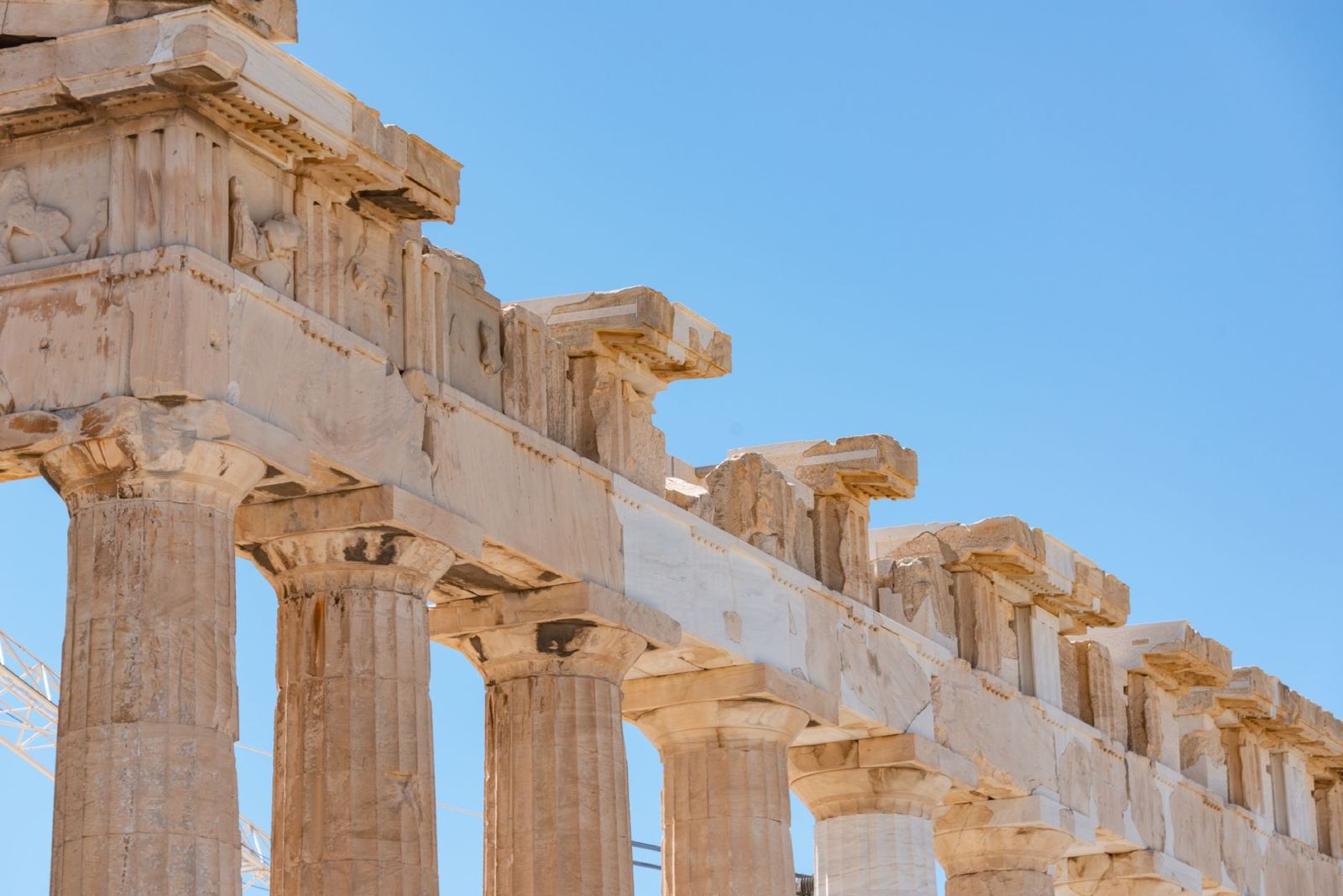
Enter the Acropolis at opening time through the south slope gate — the queue is shorter and you pass the Theatre of Dionysus on the way. After the Parthenon, go straight to the Acropolis Museum; the excavations under glass floors and the frieze layout upstairs make sense of everything you saw on the hill.
The Ancient Agora offers a calmer wander on the ground where the philosophers walked; the Temple of Hephaistos is the best-preserved temple in Greece. Above Plaka, Anafiotika is a whitewashed island village built by craftsmen from the Cyclades — hidden in the middle of the city.
In the late afternoon climb Filopappos or Lycabettus hill; watching the Acropolis turn gold at sunset is the best free show in Athens. Sunday morning at the Monastiraki flea market, midday at the Varvakios central market and evening in the tavernas of Psiri make a natural route.
Food & Drink
The heart of Greek cooking beats in meze: taramosalata, fava, saganaki and grilled octopus, accompanied by ouzo or tsipouro. Souvlaki and gyros rank among the world's best value street foods — the pita wrap version is the standard lunch.
The tradesmen's tavernas around the Varvakios market offer the shortest route from stall to plate. The Koukaki and Pangrati neighbourhoods are the laboratories of new Athenian cuisine. Coffee is taken seriously: freddo espresso is the national drink of summer. For dessert try loukoumades (honey doughnuts) and galaktoboureko. A small treat after the bill (fruit, dessert, tsipouro) is a tradition — say thanks and accept.
Practical Tips
The metro (M3) takes about 40 minutes from the airport to the centre; the X95 bus is the round-the-clock budget alternative. The central sights are largely within walking distance of each other.
Buy your Acropolis ticket online; timed entry applies in summer. The combined ticket (Acropolis + 6 sites) saves real money if you're staying a few days. Water and a hat are essential at the sites — shade barely exists. Pickpocketing occurs on the metro and in Monastiraki crowds; standard caution suffices. Taxis are cheap, but booking through an app (FreeNow/Uber-taxi) avoids fare surprises. Many small shops close between 3 and 5:30 p.m. — the Mediterranean siesta lives on.